 Landmines in Karabakh
Shirin Y.Melikova
Director of the Azerbaijan National Museum of Art, former director of Azerbaijan National Carpet Museum
PhD in Art History
Associate professor
Karabakh is one of the most beautiful places in the territory of Azerbaijan. It is a historically integral part of the country and an inexhaustible storehouse of masterpieces and talents.
Over the centuries, this region has become a true treasury of Azerbaijani art, especially music, poetry, and carpet weaving. The towns and villages of Karabakh were inhabited by skillful craftsmen who created beauty that set the ‘gold standard’ in many crafts. It's a land that nurtured great talents and bestowed poets Vagif and Natavan, singer Khan Shushinski, composer Uzeyir Hajibeyli, and numerous other artists upon the world.
Karabakh is a region in Azerbaijan with abundant natural resources, encompassing both a plain and a mountainous area. Its rich history dates back to prehistoric times and is exemplified by the Azykh Cave, where the remarkable discovery of the jaw of a primitive man, referred to as Azykhanthropus, marks the fifth finding of its kind worldwide.
In the course of history, Karabakh has been part of various state formations. It was initially part of the Safavid Empire and later became the Karabakh Khanate after the collapse of the Safavid Empire in the mid-18th century. In 1805, the khanate was annexed to the Russian Empire. Throughout the Soviet era, Karabakh was part of the Azerbaijan SSR, with the mountainous part being designated as the Nagorno-Karabakh Autonomous Oblast. Following the dissolution of the USSR in 1991, Armenians occupied Nagorno-Karabakh as well as seven other adjacent districts of Azerbaijan, declaring the Nagorno-Karabakh Republic. However, this declaration has not been recognized by any country, including Armenia. In 2020, Azerbaijan managed to militarily liberate its territories from Armenian occupation during the 44-day war, later named the Patriotic War. The victorious slogan of this war was President Ilham Aliyev's proclamation, ‘Karabakh is Azerbaijan!’
Currently, Karabakh is the most rapidly developing region of Azerbaijan. Despite being devastated by occupation, it is being actively rebuilt and is quickly regaining its former economic significance for the country. Its cultural importance for Azerbaijan is equally significant, and the government is taking substantial steps in this direction. Specifically, architectural monuments destroyed by Armenian vandals are being restored, along with the construction and restoration of museums, art galleries, and other cultural infrastructure.
The climate and natural geographical conditions of Karabakh are highly favorable for agricultural activities, particularly semi-nomadic cattle breeding. For centuries, the weavers of Karabakh have woven high-quality carpets and carpet products using soft wool threads spun by hand and dyed with natural dyes. These carpets have met the needs of both semi-nomadic and sedentary inhabitants of the region and have also been exported.
Prominent American scientist Arthur Pope in his fundamental study notes: ‘The natural conditions in Azerbaijan were remarkably conducive to the development of various arts, particularly carpet weaving. Carpet weaving probably has ancient roots in Azerbaijan. It is not surprising that civilisation emerged early in this region, perhaps earlier than elsewhere’.
Several types of carpets were woven in Karabakh, including luxurious palace carpets known for their refined composition, rich colors, and large size. Additionally, authentic carpets reflected the deep world outlook of cattle-breeding tribes through their ornamentation, while plot carpets were the result of urban culture.
In this ancient region, archaeological excavations have uncovered evidence of advanced weaving dating back to ancient times. Spindles from the Eneolithic period were discovered in Garakopektepe, along with fabric traces on vessels from the Early Bronze Age. Additionally, bone combs for combing wool and bone beats for the loom were found. The city of Barda in Karabakh was highly renowned in ancient times, serving as a capital city, a defensive fortress, and a major center of trade and crafts. A famous Arab traveler named Ibn Haykal, who visited Barda in the 9th century, referred to the city as the ‘Mother of Arran.’ Barda had four major bazaars and multiple handicraft centers, exporting Barda silk to Iran and Khuzestan, and producing custom-made silk carpets. These carpets were described as incomparable by the Arab author al-Mughaddasi. Additionally, Barda exported a red dye (called madder) to India, and dye worms known as ‘kirmiz’ were used to obtain red dye in Barda, which was exported to Europe.
The 15th and 16th centuries were a time of rapid development in Azerbaijani art, particularly in carpet weaving. This development was especially prominent in Karabakh, where luxurious carpets were produced and exported along the Great Silk Road to European countries.
Over time, Karabakh carpets gained recognition and were displayed at industrial exhibitions in cities such as Paris, Vienna, Berlin, St. Petersburg, and Moscow. For example, in 1889, about 25 Karabakh carpet exhibits were showcased at the Caucasian exhibition of agricultural and industrial items in Tiflis, representing the Shusha and Jabrayil districts.
During the 18th century, carpet weaving in the Karabakh region shifted to the highland area, particularly the town of Shusha and its surrounding villages. While carpets were still being produced in lowland regions such as Jebrail, Aghdam, Barda, and Fizuli, Shusha carpets were widely regarded as the best in the area. In the early 20th century, researcher A.S. Piralov noted: ‘... no other corner of the Caucasus produced as many diverse and extremely valuable carpets as Karabakh. Shusha was considered a leader in artistic tastes and was a hub for large sales, with the best craftswomen setting the standard for carpet production not only in the region, but also across the entire Transcaucasia.’.
The exquisite carpets from the Zangezur, Talysh-Lankaran, and Nakhchivan production centers form the esteemed Karabakh group of carpet weaving. While two of these centers are now located in Azerbaijan, the Zangezur center resides in modern-day Armenia, despite its historical Azerbaijani population.
In Shusha, unlike the rest of Karabakh, they shifted from the typical artistic design of carpets to the whimsical floral decor of Tabriz carpets. This was transformed to incorporate the geometric ornaments typical for Karabakh, and the coloring, which was originally based on halftones, was replaced by contrasting saturated color shades in local traditions. Examples of such compositions are ‘Balyg,’ ‘Khatai,’ and ‘Afshan.’ One of the distinctive features of Karabakh carpets is the red color of the middle field's background. Overall, the color range is very vibrant due to the diverse flora of Karabakh, including many plants that provide rich dyes. In addition to plant dyes, koshenil was also actively used.
The carpet weavers of Southern Azerbaijan used both the ‘farsbaf’ knot and the ‘turkbaf’ knot, while in Karabakh they only used the ‘turkbaf’ knot.
The historical circumstances and geographical location influenced the openness of Karabakh weavers to new trends in carpet weaving over the centuries. This group of Azerbaijani carpet weaving is known for a wide range of features, including technical aspects, composition types, pile height, and size. Karabakh carpet weavers were equally adept at producing medallion, ornamental, and plot products, as well as prayer rugs (namazligi). One common feature was the use of geometric designs and a high degree of abstraction in figural motifs.
The area was known for weaving both pile and flat-woven carpets, producing more carpets than any other carpet-weaving region in Azerbaijan. The wool of the Karabakh sheep, one of the oldest and most common breeds in Azerbaijan, was used in the carpets. This breed was bred in Kalbajar, Agdam, Jabrayil, and other places within Karabakh. The wool of the Karabakh sheep is somewhat coarse but has remarkable luster. Carpets were made dense with short pile in mountainous areas and looser with long pile in plain territories. Carpets from both highland and plain parts of Karabakh are known for their density and durability, as the most durable and longest wool from the backs of pedigree sheep, combed three times on a special comb and polished with a metal rod for smoothness, was used for their warp and weft.
The Karabakh carpets were known for their large size, sometimes reaching up to 30 square meters, which was larger than carpets from any other region in Azerbaijan. This was due to the spacious dwellings and traditional interiors in Karabakh, which required appropriately sized carpets. As a result, a unique feature of local carpet weaving emerged in the form of carpet sets called "dast hali gyaba," consisting of one large carpet and several side carpets that together formed a single ensemble. This product was prestigious and not affordable to everyone, which added to its exclusivity.
The Karabakh type of carpet weaving consists of 33 compositions including 'Bagchadaguller', 'Balyg', 'Buynuz', 'Bakhmanli', 'Karabakh', 'Goja', 'Gasimushagi', 'Lyambiaran', 'Mugan', 'Talish', 'Lamp', 'Malybeyli', 'Khanlig', 'Hantirmya', 'Chelebi', 'Shabalidbuta', and 'Nakhchivan'. These are divided into three groups - Shusha, Karabakh, and Jabrayil, according to the classification by carpet expert Latif Kerimov.
The most famous compositions that have become the hallmarks of this type of carpet weaving are worth mentioning.
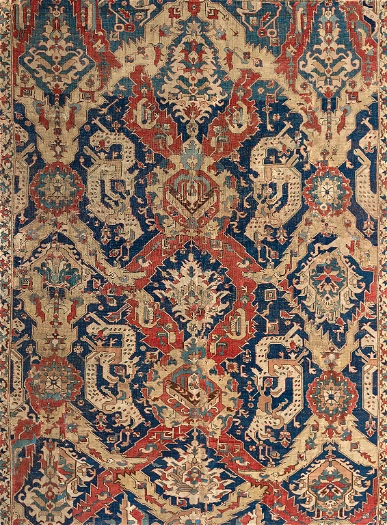
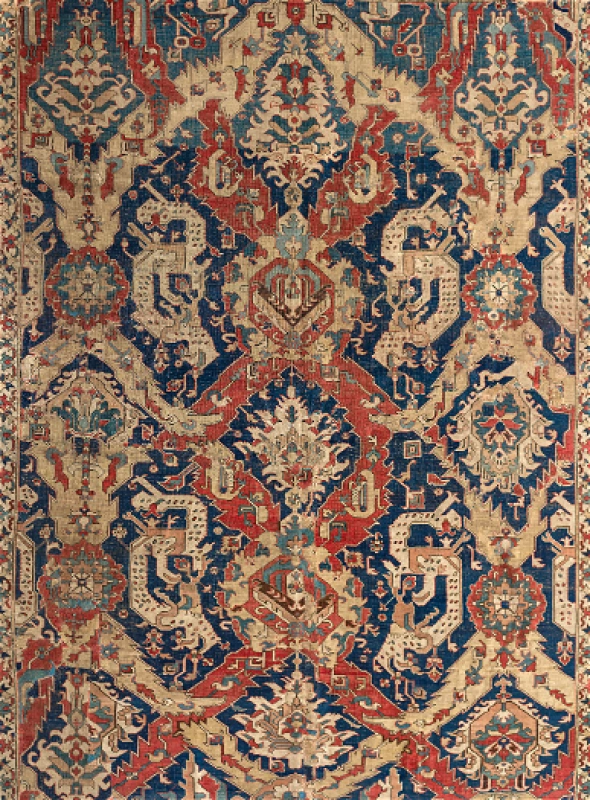
During the Safavid era, particularly in the 17th century, Karabakh was renowned for its 'dragon' carpets such as 'Khatai' and 'Ajdahali'. The 'dragon' motifs, which are characteristic of Turkic peoples, are among the oldest images found on many Azerbaijani art monuments. These motifs have deep roots in Azerbaijani art, as evidenced by rock paintings in Gamigaya and a depiction of a three-headed dragon blocking a water stream on a golden bowl from a burial mound in Hasanli. The dragon holds significant importance in Azerbaijani folk tales, and several local place names also have 'dragon' origins.
The dragon motifs in Azerbaijani carpet weaving became famous in the form of the 'Khatai' composition. Khata, or Khatai, is one of the tribes at the origins of the Azerbaijani people. Ornaments characteristic of this tribe is also called 'Khatai'. This composition typically consists of intersecting wide branches with serrated edges directed from bottom to top. The element depicting a dragon is always placed near the palmette, serving as an amulet. These carpets were considered by the people as amulets for home, family, and tribe.
The world's museum collections and private collections, such as the Museum of Turkish and Islamic Art in Istanbul, are adorned with 'dragon' carpets. The 17th century Karabakh Khatai carpet, a valuable exhibit from the collection of pile carpets at the Azerbaijan National Carpet Museum, was presented to the museum by the Heydar Aliyev Foundation in 2018. This carpet, reminiscent of palace carpets from the Safavid era, features stylized plant and zoomorphic ornaments typical of carpets from the Karabakh group. Its composition includes images of dragons, Simurgh birds, ducks, the tree of life, fantastical creatures, and palmettes in the middle field.
It's interesting to note that the depiction of dragons in Azerbaijani carpet weaving has evolved over time and initially did not have a stylized appearance. The older the carpet, the more lifelike the dragons appear in its design. This is exemplified by a relatively recent addition to the Azerbaijan National Carpet Museum - a 17th-century Khatai carpet purchased from a German antique dealer. This particular 'Khatai' is older than most similar pieces in museums in Azerbaijan, and carpets of this age are considered rare worldwide. In its design, elements symbolizing dragon figures exhibit a noticeable realism, despite the inherent geometric patterns in carpet ornamentation. The paws and wings are discernible, and the white bodies are adorned with small colored spots, likely representing scales.
One of the most well-known compositions of the Shusha group is the piece called ‘Malybeyli,’ named after the village of the same name located 15 km north of the city of Shusha. This composition features medallions, each inscribed with a square symbolizing a body of water. Inside the square, there are water dragons guarding a swastika, while elements representing clouds, known as "bulud," are placed around the square. This type of carpet is considered one of the most ancient versions of dragon carpets.
The Jabrayil group is best known for their creation ‘Gasimushagi,’ named after the legendary ancestor Gasim. This composition originally originated as an embroidery ornament in the 17th century and later transitioned to carpet weaving. As a result, old carpet weavers and the local population in that district still refer to it as ‘Tikme Gebe’ or ‘Tikme Khalcha,’ which means ‘Carpet Embroidery.’ From an artistic standpoint, ‘Gasimushagi’ is one of the most unique carpet compositions influenced by the traditions of palace carpet weaving in the Safavid era. The design typically features a central medallion and branching ‘sleeves’ that contain a stylized dragon image. The filling elements consist of geometric, vegetal, zoomorphic, and tamgo-like patterns. Additionally, the medallion is adorned with an ornament known as ‘boyuk khoryumchyak,’ or ‘big spider,’ composed of various elements.
Another famous type of 'dragon' carpet from Azerbaijan is ‘Chelebi’. These carpets were produced in two villages with the same name, near Jabrayil and near Barda. Barda served as the center of the Karabakh type of carpet weaving in the lowland areas of the region. The word ‘chelebi’ has multiple meanings, one of which is the name of a Sufi order. The members of this order lived in the two mentioned villages under the Safavids, which is why the villages were named after them. The village Chelebi, located near Jabrayil, no longer exists as it was destroyed by Armenian invaders, but its name continues to live on in these carpets. The main feature of the ‘Chelebi’ carpet is its characteristic medallion with white rays on a red background, resembling the disc of the sun. This medallion symbolizes the metaphysical divine light 'nur', in which a Sufi, who follows the path of spiritual perfection, dissolves. In essence, the entire composition of this carpet visually represents the stages of the Sufi's spiritual path.
In the Karabakh region, carpet weavers created both ornamental pile carpets and plot carpets illustrating people, animals, birds, and scenes from classical literature. The weavers drew inspiration from Tabriz plot carpets, producing compositions such as 'Meeting of nobles', 'Rustam and Sohrab', 'Yusif and Zuleikha', and 'Three Padishahs'. During the 16th century in Tabriz, under the Safavid court, artisans crafted high-quality carpets depicting scenes from the works of Ferdowsi, Nizami, Khagani, Saadi, and other literary classics. While the compositional principles of miniature painting in Tabriz carpets differed from those of Karabakh carpets, similar subjects received a distinct folk interpretation.
While carpet weaving, one of the most popular themes was the story of Rustam and Sohrab, characters from Fizuli's poem ‘Shahnameh’. Rustam, a renowned hero, embarked on adventures soon after his wedding without knowing that his wife had borne him a son, Sohrab, who also grew up to be a great hero. Years later, Rustam unknowingly dueled and killed Sohrab, only to later discover that Sohrab was his son, identified by the bracelet he had given his wife on their wedding day. However, in carpet weaving, this tragic story is usually depicted conventionally: the two heroes are shown sitting in luxurious armchairs, giving the appearance of peaceful conversation. They look almost identical, except that Rustam has a much longer beard, emphasizing their kinship and their age difference. These carpets with the motif of ‘Rustam and Sohrab’ can be observed in numerous museums worldwide, including a notable piece in the collection of the Azerbaijan National Museum of Art.
The Karabakh carpets have garnered worldwide acclaim for Azerbaijani carpet weaving, and they are showcased in esteemed museums across the globe. Notable institutions include the Victoria and Albert Museum, the Louvre Museum, the Canadian Textile Museum, the Textile Museum at George Washington University, the Philadelphia Museum of Art, the Burrell Museum in Glasgow, the Dresden Museum of Ethnography, the Rijksmuseum in Amsterdam, the Reitberg Museum in Zurich, the Museum of Applied Arts in Budapest, and the Museum of Arts and Crafts in Zagreb. These masterpieces stand as a testament to the rich heritage and exquisite artistry of Azerbaijani carpet weaving.
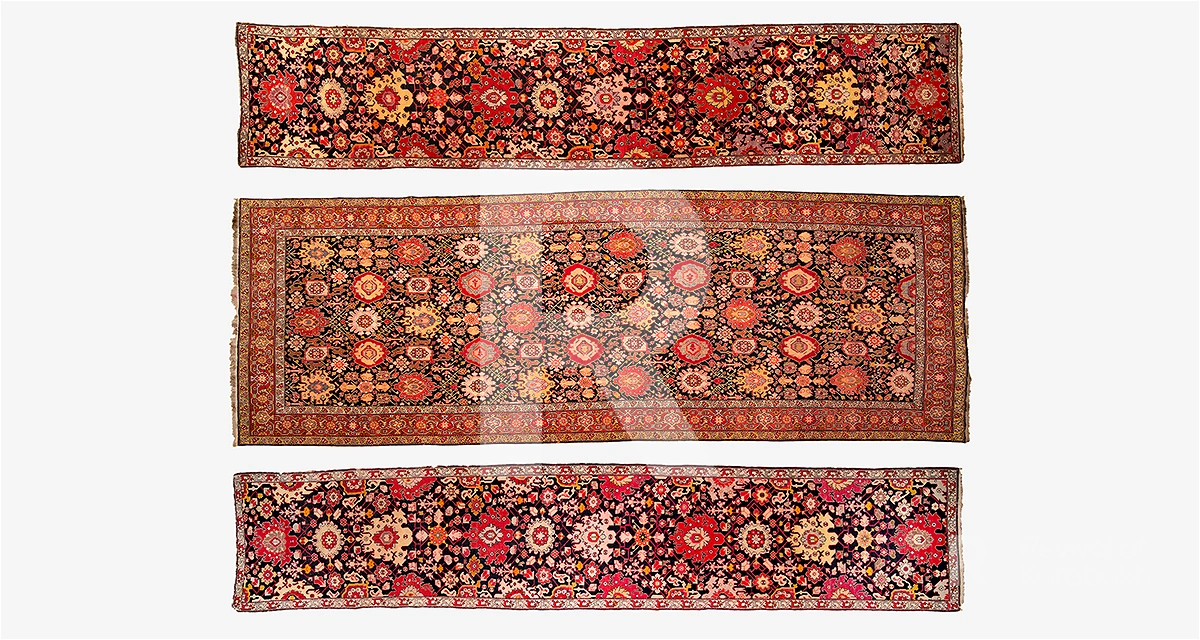 Goja Carpet. 20th century. 598 x 110 cm, 590 x 210 cm, 582 x 116 cm Azerbaijan. National Carpet Museum
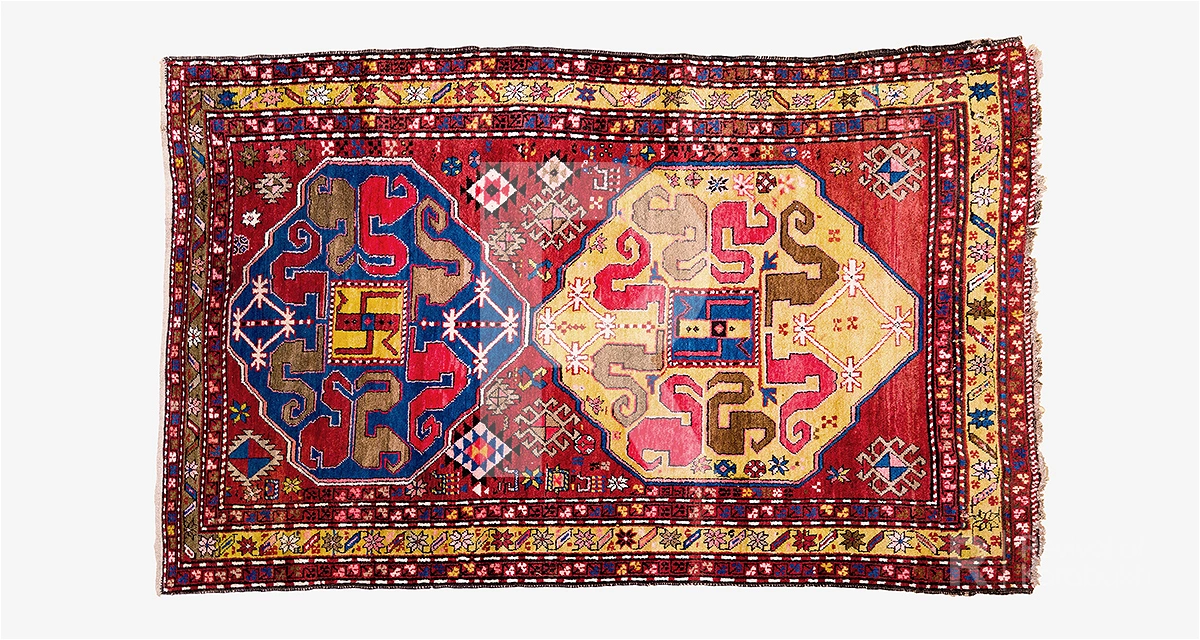 Malibeyli Carpet. Early 20th century. 230 x 142 cm. Azerbaijan National Carpet Museum
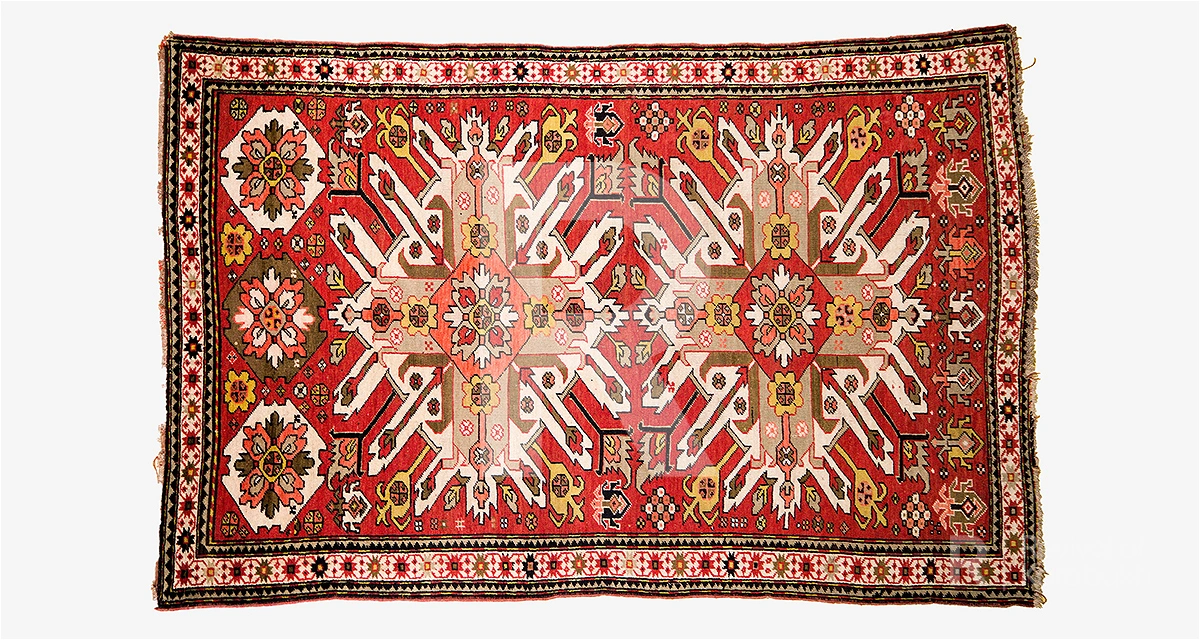 Chelebi Carpet. Early 20th century. 223 x 145 cm. Azerbaijan National Carpet Museum
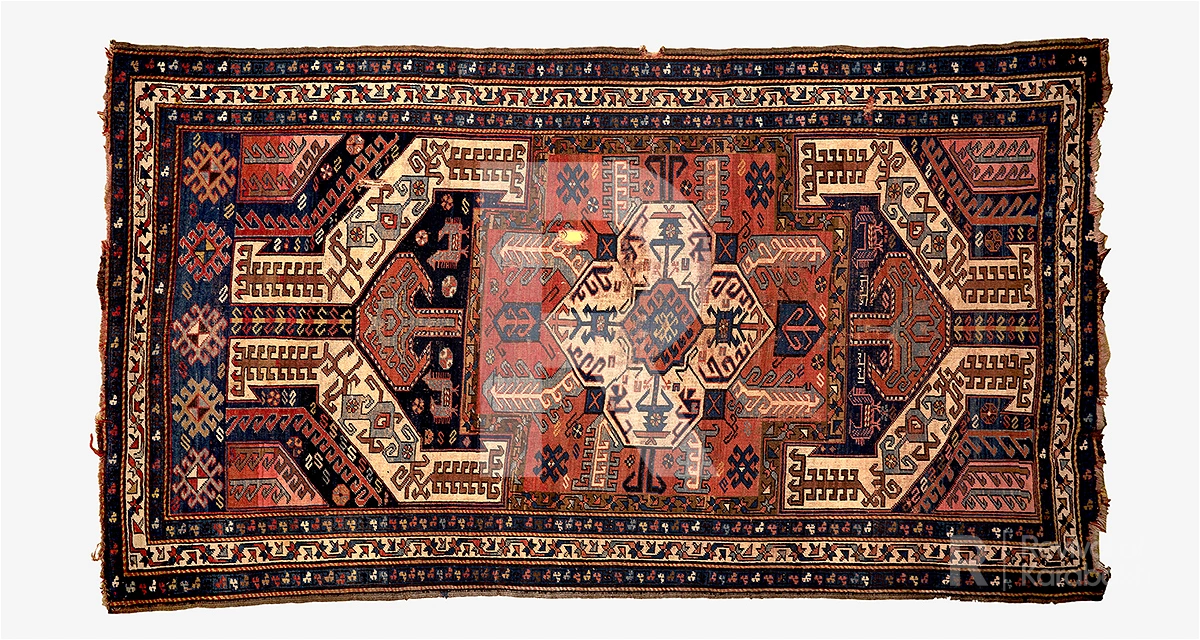 Gasimushaghy Carpet. 1912. 284 x 160 cm. Azerbaijan National Carpet Museum
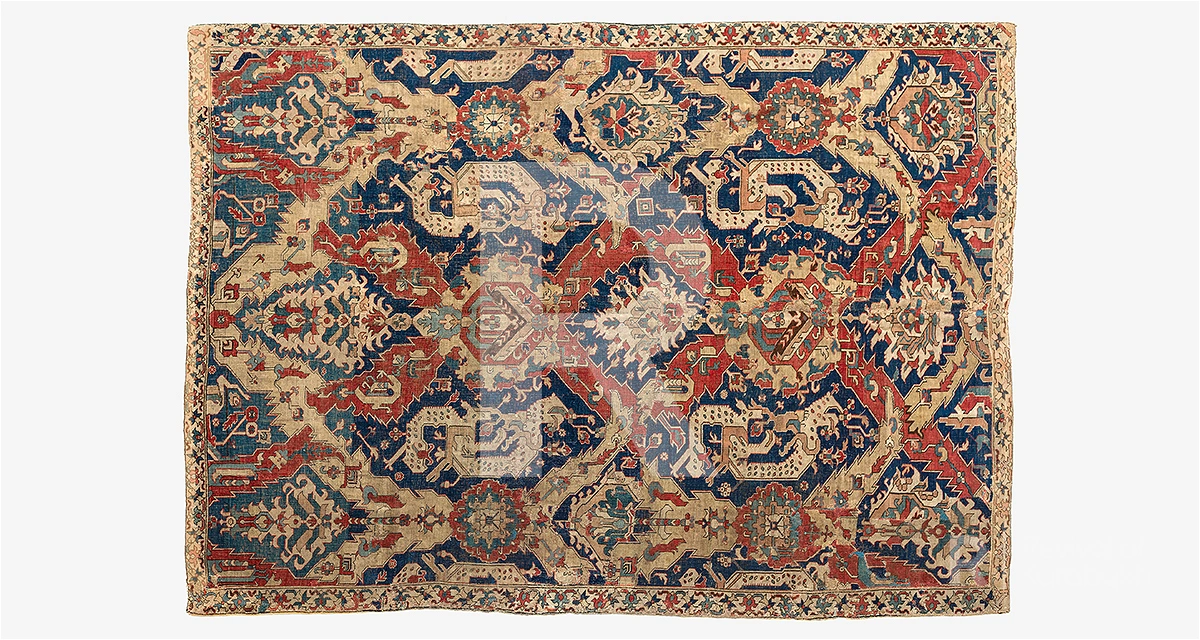 Khatai Carpet Early 17th century. 320 x 230 cm Azerbaijan National Carpet Museum
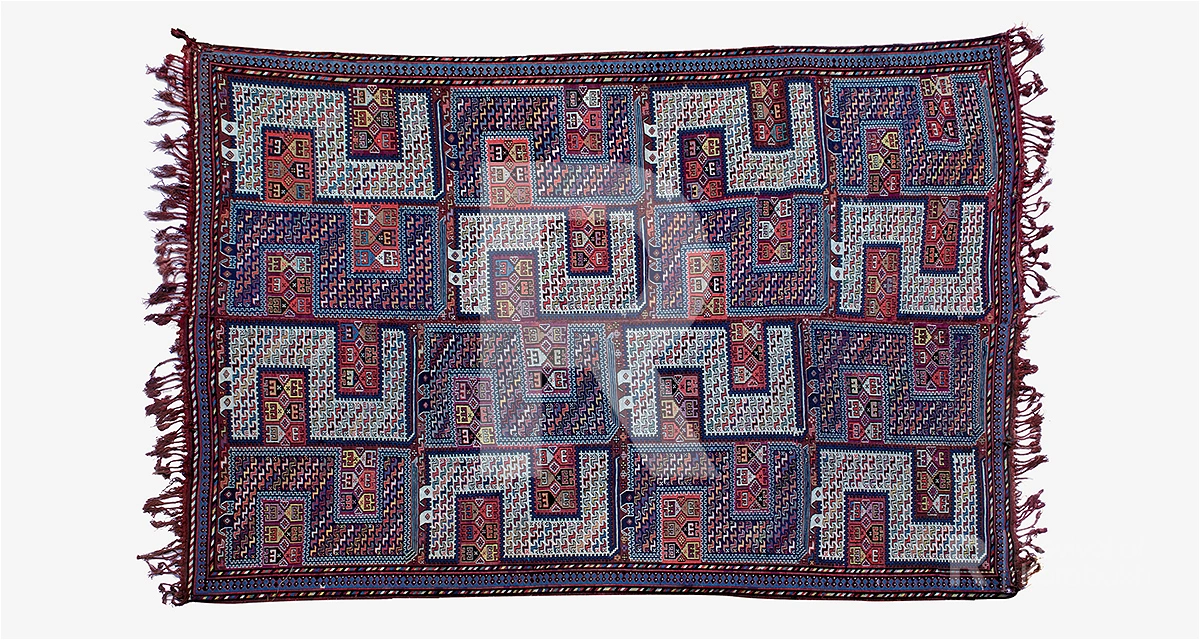 Varni. Early 19th century. 273 x 207 cm. Azerbaijan National Museum of Art
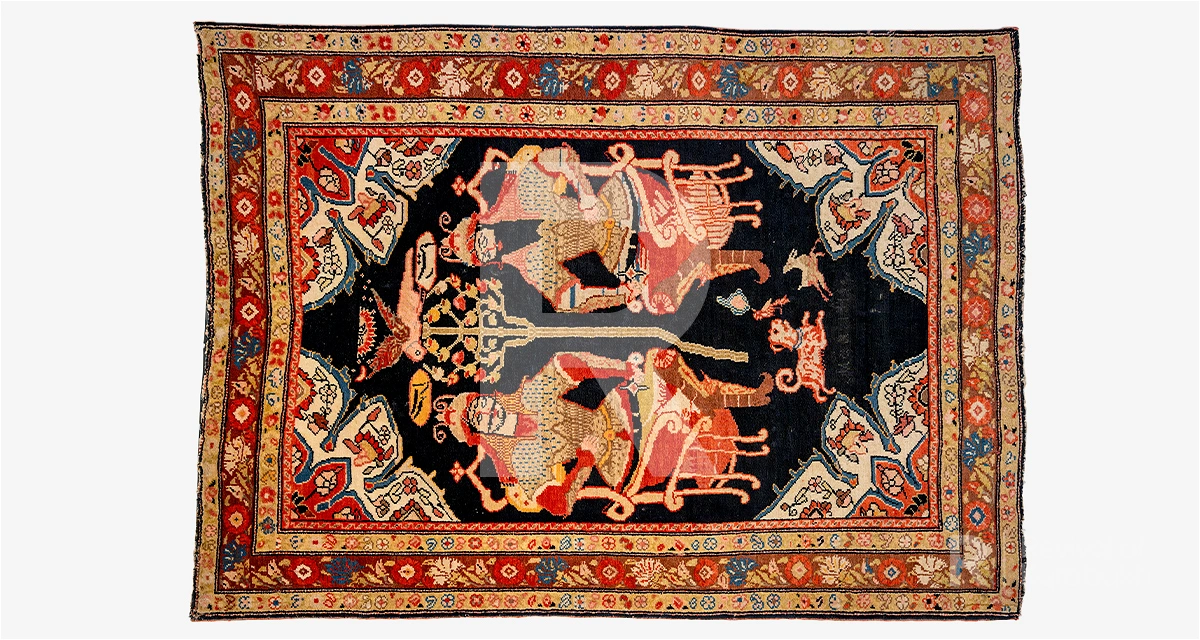 Rustam and Zohrab Carpet. 1911. 289 x 135 cm. Azerbaijan National Museum of Art
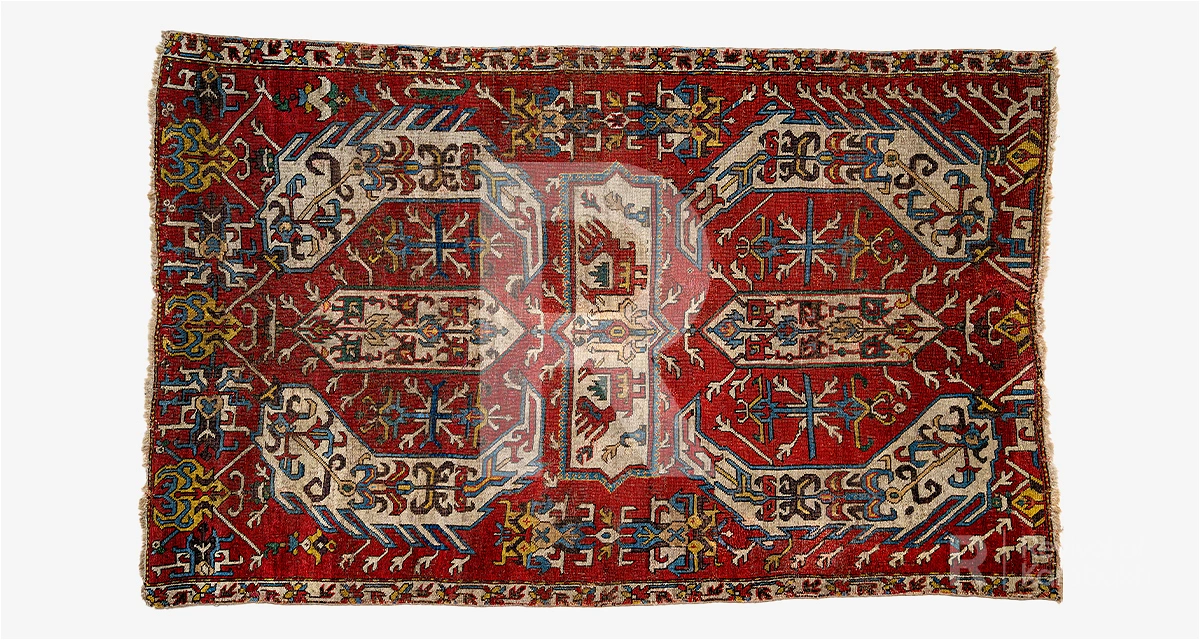 Dragon Carpet. Late 17th century – early XVIII century. 174 x 109 cm. Azerbaijan National Museum of Art
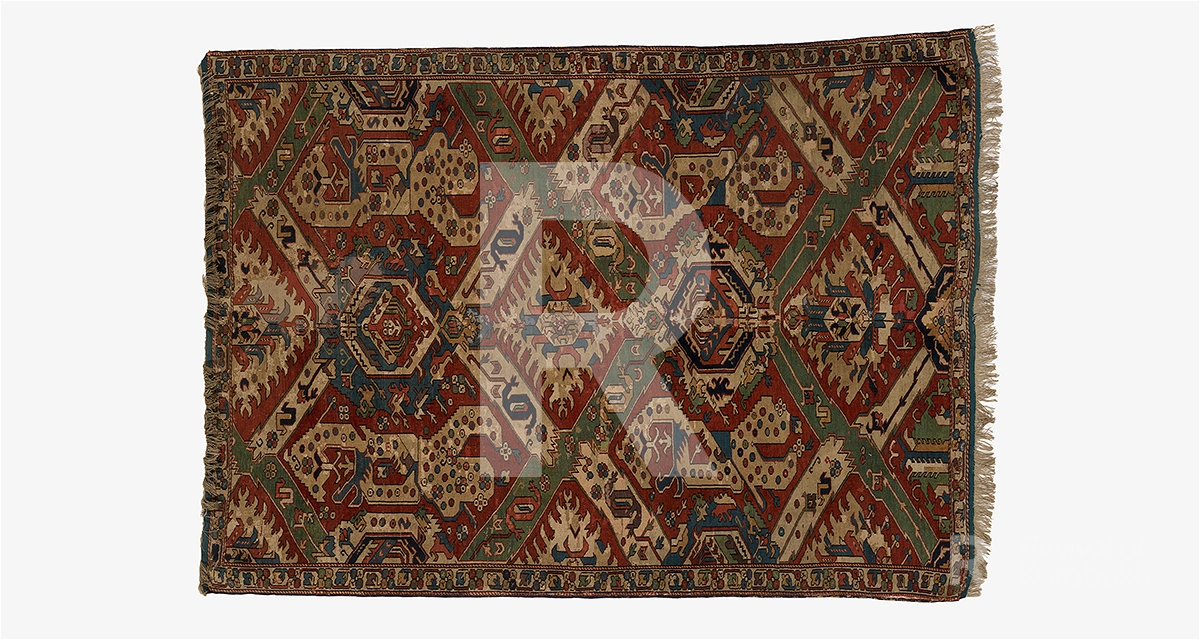 Ajdahaly (Dragon) Carpet. Late 18th century. 246.3 x 182.9 cm. Glasgow Museum