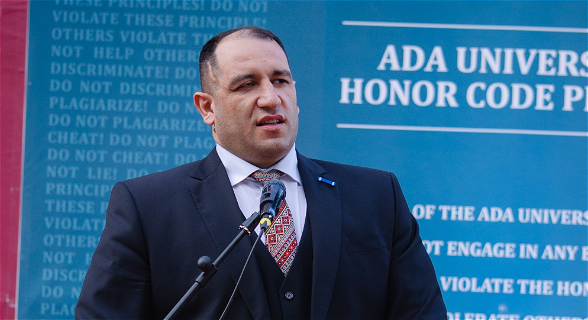
 Vahid Hajiyev
Special Representative of the President of the Republic of Azerbaijan in the Jabrayil, Gubadli and Zangilan districts
Vahid Hajiyev
Special Representative of the President of the Republic of Azerbaijan in the Jabrayil, Gubadli and Zangilan districts
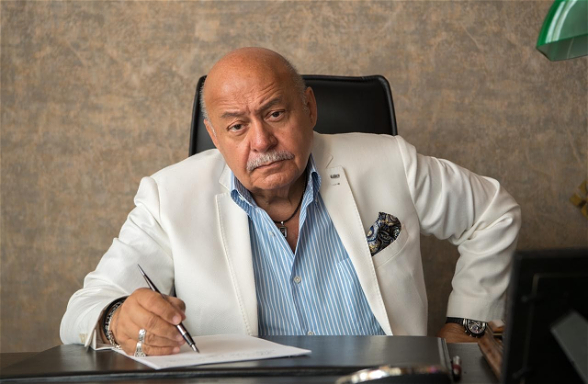
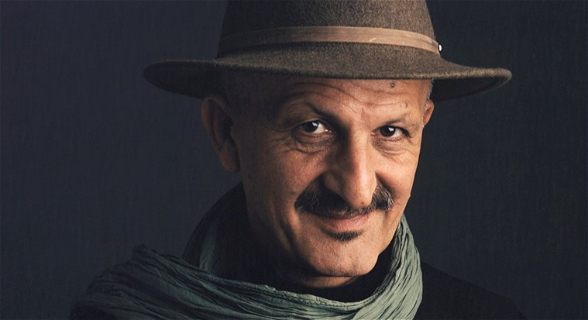
Elbay Gasimzade
Chairman of the Union of Architects of AzerbaijanIntro
In this interview, Elbay Gasimzade, Chairman of the Union of Architects of Azerbaijan, reflects on the importance of architectural heritage in Azerbaijan, particularly in the liberated Karabakh region.
He discusses the historical significance of the region's architecture, the destruction of cultural monuments during the Armenian occupation, and the restoration efforts currently underway. Gasimzade emphasizes that while modern developments are necessary, preserving the unique architectural identity of Karabakh is a priority. He highlights the challenges of balancing restoration with contemporary design, ensuring that the region’s cultural heritage is respected and revitalized.
Summary
In Elbay Gasimzade’s opinion, architecture plays a fundamental role in preserving the identity and history of a nation. As the Chairman of the Union of Architects of Azerbaijan, he believes that architecture in Azerbaijan, particularly in the Karabakh region, dates back thousands of years. Gasimzade points out that archaeological evidence reveals that cities in the region existed as far back as three to five thousand years before our era, proving that architecture has deep roots in Azerbaijani history. He views architecture as an integral part of the land, reflecting the culture and people of the area.
Gasimzade reflects on the personal joy he feels in seeing Karabakh liberated after decades of occupation. For 30 years, he had worried that he might not live to witness such a moment, but now, as an architect, he is directly involved in the reconstruction efforts. He emphasizes that the architectural monuments in Karabakh are primarily from the period of Caucasian Albania and are part of Azerbaijan’s cultural heritage. According to Gasimzade, these monuments were built long before the arrival of Armenians in the region in the early 19th century, and the Armenians have no historical claim to them. He expresses frustration over the Armenians' attempts to "Armenianize" the monuments by altering inscriptions and symbols, but he believes that these efforts were ultimately unsuccessful in erasing the true heritage of the region.
Gasimzade recalls visiting Khankendi in 1982 during the opening of the Molla Panah Vagif mausoleum in Shusha. At that time, Khankendi was a small, modest town. He expresses a personal connection to the city, as his father designed a hotel there in the 1940s. While Gasimzade has not returned to Khankendi since the liberation, he hopes to visit soon and witness the city’s transformation.
In Gasimzade’s view, the destruction caused by the Armenian occupation was deliberate, and he believes that the Armenians knew from the beginning that these lands will be again under Azerbaijan’s sovereignty. This, in his opinion, explains why they destroyed cities and historical monuments instead of preserving them. Gasimzade emphasizes the immense responsibility of architects in rebuilding these areas and creating modern cities and settlements that are attractive enough to encourage people to return. He notes that those who have lived in Baku for decades must be provided with living conditions that are on par with what they have become accustomed to in the capital.
Gasimzade explains that the restoration work in Karabakh is being carried out by both Azerbaijani architects and international professionals, allowing for a blend of different cultural influences. He is confident that the architectural identity of Karabakh will not be lost, as the reconstruction efforts are grounded in the region’s cultural heritage. He stresses the importance of preserving the historical and aesthetic aspects of the area, even as modern buildings are introduced.
As a professional architect, Gasimzade is pleased with the restoration work in Shusha. He acknowledges that while the city was not as severely damaged as other areas, due to the fact that Armenians lived there during the occupation, significant historical buildings, such as the house of General Mehmandarov, were deliberately destroyed. However, he is optimistic that these structures are being faithfully restored based on historical records and documentation.
Gasimzade is adamant that all new construction in Karabakh must take into account the cultural and architectural heritage of the region. In his view, modern buildings can coexist alongside historical structures, but they must respect the aesthetic and cultural context of the area. He believes that architecture should always reflect the time in which it is created while honoring the traditions and customs of the past.
Reflecting on international examples, Gasimzade is not aware of any other country that has undertaken such large-scale restoration efforts following the liberation of occupied territories. He is proud of Azerbaijan’s achievements in restoring the Karabakh region, noting that construction and restoration work is being carried out simultaneously across the entire area. Roads, infrastructure, public buildings, and housing are all being developed to create a livable environment for returning residents.
Gasimzade concludes by expressing his gratitude for the opportunity to contribute to this monumental task. He believes that Azerbaijan is setting an example for the world in how to restore and preserve cultural heritage while building a prosperous future.