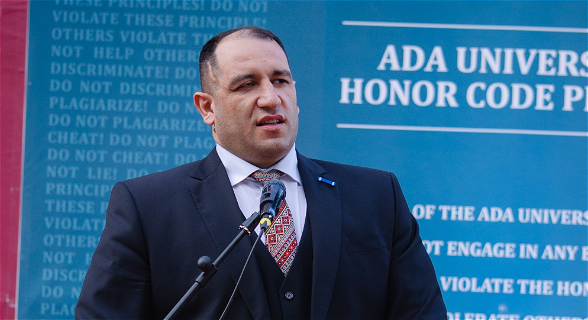
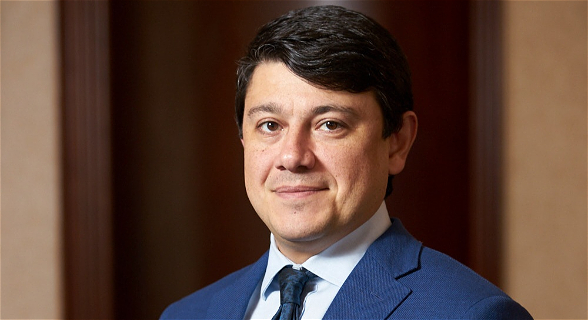
 Fuad Muradov
Chairman of the State Committee on Work with Diaspora of the Republic of Azerbaijan
Fuad Muradov
Chairman of the State Committee on Work with Diaspora of the Republic of Azerbaijan
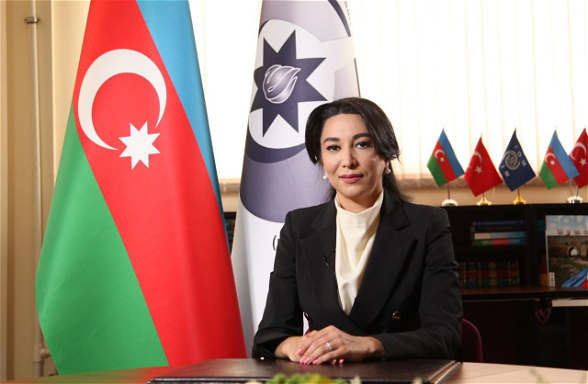
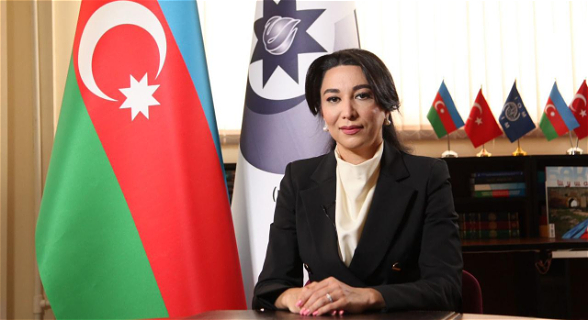
Sabina Aliyeva
The Commissioner for Human Rights (Ombudsman) of the Republic of AzerbaijanIntro
In this interview, Sabina Aliyeva, the Commissioner for Human Rights (Ombudsman) of the Republic of Azerbaijan, discusses her transition into the role, which occurred during a time of significant events, including the Second Karabakh War and the COVID-19 pandemic.
She highlights her office’s efforts to document war crimes committed against Azerbaijani civilians, cultural heritage, and the environment. Aliyeva emphasizes the importance of raising awareness about these atrocities both domestically and internationally and reflects on the broader human rights challenges, such as the fate of missing persons from the First Karabakh War and landmine-related civilian casualties.
Summary
In Sabina Aliyeva’s opinion, stepping into the role of Ombudsman was both a great honor and an enormous responsibility, especially given the historical context in which she took office. She explains that her appointment came just before the onset of the Second Karabakh War, a time when Azerbaijan faced significant challenges. Aliyeva feels privileged to have been elected to this role by the parliament following her nomination by President Ilham Aliyev, and she views her position as a bridge between the Azerbaijani people and the state.
Aliyeva recalls how her office had to adapt quickly to the unfolding events, particularly during the war and the COVID-19 pandemic. She emphasizes that her team worked tirelessly to remain accessible to the public, establishing a 24/7 call center and ensuring that both Azerbaijani citizens and foreigners could reach out with their concerns. In her view, the Ombudsman’s office is the last place people turn to when they have exhausted other options, making it crucial to provide support and resolve issues whenever possible.
A key focus of Aliyeva’s work has been documenting the war crimes committed by Armenian forces during the Second Karabakh War. She notes that her office has produced 17 reports, which meticulously detail the destruction of civilian infrastructure, cultural monuments, and the environment. Aliyeva believes that this documentation is critical not only for holding perpetrators accountable but also for educating future generations about these atrocities. She highlights the extensive damage done to Azerbaijan’s flora and fauna, including rare species listed in the country’s Red Book, as well as the alteration of river flows, which has had lasting ecological consequences for the region.
Aliyeva underscores the importance of raising international awareness about these crimes, noting that her office has been proactive in disseminating reports to global human rights institutions, international courts, and libraries. She believes that the international community’s failure to respond adequately to these crimes could lead to their repetition in other parts of the world. In her view, silence in the face of such violations only encourages further atrocities.
When asked about the fate of missing persons from the First Karabakh War, Aliyeva expresses deep sorrow, calling it one of the most challenging aspects of her work. She points out that 3,890 Azerbaijanis, including many women and children, remain unaccounted for. Despite numerous appeals to the international community and Armenia for information, no answers have been provided. Aliyeva feels that this unresolved issue represents a significant human tragedy, and she continues to push for action at international forums.
Regarding landmines, Aliyeva is frustrated by Armenia’s refusal to provide accurate maps of mined areas, which has resulted in hundreds of civilian deaths and injuries. She stresses that landmines are not just a security issue but a human rights violation, as they prevent displaced people from safely returning to their homes. In her opinion, the international community’s inaction on this matter is deeply troubling.
Reflecting on her broader role, Aliyeva acknowledges the emotional toll of her work, especially when dealing with issues like missing persons and war crimes. However, she finds strength in the positive outcomes her office achieves, believing that every success pushes her and her team to continue fighting for justice. Aliyeva is proud of the work she has done and remains committed to serving the Azerbaijani people, confident that the international community will eventually recognize the justice of Azerbaijan’s cause.