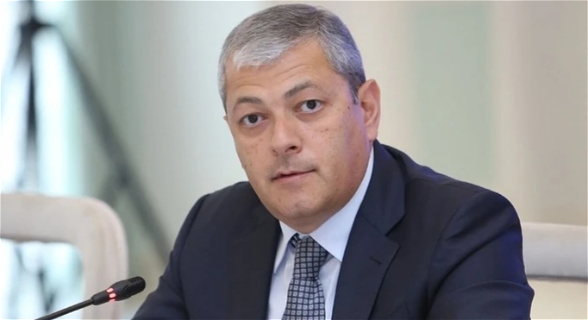
 Aydin Karimov
Special Representative of the President of the Republic of Azerbaijan in the Shusha district
Aydin Karimov
Special Representative of the President of the Republic of Azerbaijan in the Shusha district
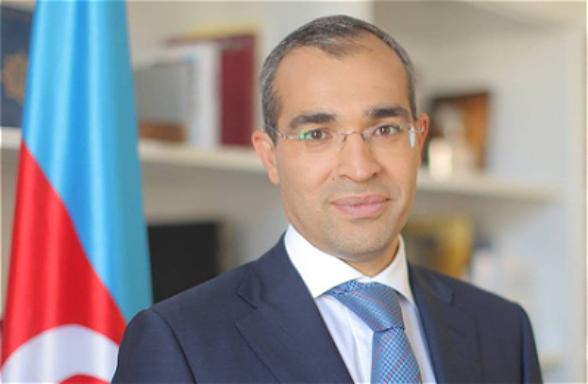
Mikayil Jabbarov
Minister of Economy of the Republic of AzerbaijanIntro
In this interview, Mikayil Jabbarov, Minister of Economy of the Republic of Azerbaijan, discusses the multifaceted impact of the Karabakh conflict on Azerbaijan's economy.
He explores the extensive damage caused by the occupation and the methodology used to calculate the direct and indirect costs of the conflict, including lost assets, looted resources, and the long-term financial burden of supporting displaced persons. Jabbarov also reflects on Azerbaijan’s ambitious reconstruction efforts in the liberated territories, emphasizing the importance of creating sustainable economic opportunities and restoring the social fabric of the returning communities.
Summary
In Mikayil Jabbarov’s opinion, the economic consequences of the Karabakh conflict cannot be fully captured by financial figures alone. While Azerbaijan’s Ministry of Economy has developed methodologies to assess the direct losses caused by the Armenian occupation—such as the destruction of infrastructure, illegal exploitation of natural resources, and the financial costs of housing and supporting displaced persons—Jabbarov believes that some losses, like the destruction of historical monuments and the emotional impact on communities, are impossible to quantify. He emphasizes that the broader picture includes significant urbicide and ecocide, the environmental degradation of the region, and the cultural loss sustained over decades.
Jabbarov explains that while the Ministry has a clear approach to calculating replacement and reconstruction costs, determining the total economic impact is a complex process that requires long-term analysis. He draws attention to the more than $10 billion Azerbaijan has invested in reconstruction efforts over the past three years, primarily in infrastructure repair and urban development. Despite this massive investment, Jabbarov notes that there is still a substantial financial burden associated with demining the liberated territories, an effort hampered by the incomplete and unreliable minefield maps provided by Armenia.
Discussing the human capital lost during the conflict, Jabbarov reflects on the resilience of Azerbaijan’s internally displaced persons (IDPs). He explains that a deliberate policy was implemented to integrate IDPs into Azerbaijani society while maintaining their community bonds and identity. He believes that this approach has paid off, as evidenced by the overwhelming willingness of IDPs to return to Karabakh once reconstruction is complete. According to Jabbarov, the government’s efforts to provide education, jobs, housing, and healthcare for IDPs helped preserve the social fabric of communities even in exile, ensuring that these groups could rebuild their lives when they returned to their ancestral homes.
When asked about the ambitious goal of turning Karabakh into "paradise," as President Ilham Aliyev has stated, Jabbarov acknowledges the immense challenges associated with rebuilding such a large portion of the country. He notes that the reconstruction of 20% of Azerbaijan’s territory requires careful coordination between demining operations, infrastructure development, and the return of economic activity. In his view, it is crucial to synchronize the pace of reconstruction with the return of businesses and residents, ensuring that economic opportunities are available to those who resettle in the region. Without jobs and economic activity, Jabbarov believes that the return of IDPs would not be sustainable.
Jabbarov also highlights the importance of attracting foreign direct investment (FDI) to support Karabakh’s development. He explains that international investors have shown interest in sectors like construction, power generation, and natural resources, with major companies like BP actively involved in renewable energy projects in the liberated territories. While the Azerbaijani government offers tax incentives and fiscal support to encourage investment, Jabbarov stresses that economic sustainability must be at the core of any development plan. He believes that private sector investment should be driven by long-term profitability, not just patriotism, as enterprises that are not economically viable will not provide lasting benefits to the region.
Reflecting on the broader regional implications of Azerbaijan’s victory in Karabakh, Jabbarov is optimistic about the potential for economic cooperation across the South Caucasus. He points out that Azerbaijan’s peace initiatives, spearheaded by President Aliyev, are aimed at fostering economic partnerships with neighboring countries, including Armenia, Georgia, and Central Asian nations. Jabbarov believes that peace and stability in the region will open up new trade routes, investment opportunities, and economic growth for all parties involved.
Ultimately, Jabbarov views the reconstruction of Karabakh as a long-term project that will not only restore the region but also set a new standard for economic development and social integration in Azerbaijan. He is confident that with continued investment, planning, and coordination, Karabakh will become a thriving and prosperous part of Azerbaijan’s future.
Short videos
 Estimating war losses and economic damages
 Azerbaijan’s unique reconstruction challenge
 FDI and turning Karabakh into a global brand
 Keeping Karabakh investor-friendly and open
 Azerbaijan’s rise fueled by young talent
 Karabakh as a green energy hub for Europe