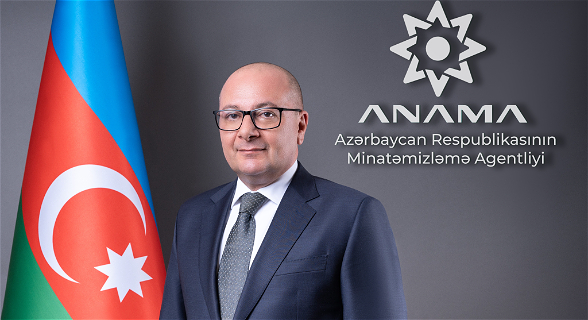
 Vugar Suleymanov
Chairman of the Board of the Mine Action Agency of the Republic of Azerbaijan
Vugar Suleymanov
Chairman of the Board of the Mine Action Agency of the Republic of Azerbaijan
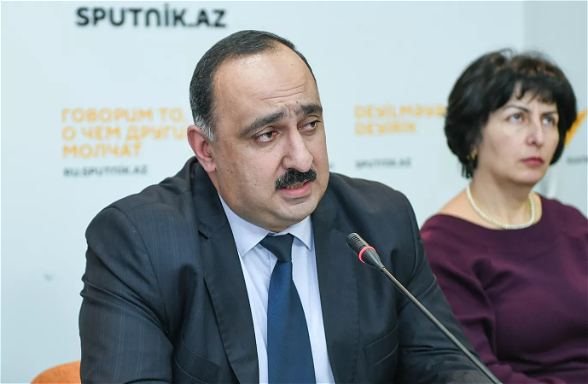
Ilgar Niftaliyev
Associate professor, Deputy Director of the Institute of History and Ethnology of the National Academy of Sciences of AzerbaijanIntro
In this interview, Ilgar Niftaliyev, a historian, reflects on the falsification of Armenian history and how Armenians have distorted historical narratives to lay claims to the Karabakh region. He emphasizes that the notion of “Great Armenia” is a fabrication used by Armenian leaders to justify territorial claims.
Niftaliyev discusses how Armenian authorities systematically destroyed the natural environment in Karabakh, indicating that they knew they would eventually have to abandon the land. He also addresses the mass migration of Armenians to the South Caucasus in the 19th century, driven by Russian imperial ambitions, and the role of the Armenian Church in the displacement.
Summary
In Ilgar Niftaliyev’s opinion, the concept of a "Great Armenia" is a fabricated myth perpetuated by Armenian leaders to create a false historical narrative that justifies their territorial claims in the South Caucasus.
He explains that Armenians have used this narrative to convince the world of their ancient ties to the region, despite evidence to the contrary. Citing historical sources, including the works of Strabo, Niftaliyev argues that Armenia was never a powerful or unified state. In fact, the notion of "Great Armenia" has more to do with geographic distinctions—such as the difference between "Greater Armenia" and "Lesser Armenia"—than with political or military might.
Niftaliyev reflects on the destruction caused by Armenian forces during the occupation of Karabakh, particularly the environmental damage they inflicted. He notes that forests were cut down, trees destroyed, and lakes poisoned, all of which suggest that the Armenians knew they would eventually be forced to leave the land. In his view, this destruction was not just an act of malice but also a way for the Armenian authorities to profit from the region’s natural resources while keeping the local Armenian population under their control. He believes that the corrupt leadership in Karabakh deliberately gave false hope to the Armenian residents, encouraging them to believe they could maintain control of the region indefinitely.
Turning to the subject of Armenian migration, Niftaliyev provides a historical perspective on how Armenians were resettled in Karabakh, Nakhchivan, and other areas of the South Caucasus by the Russian Empire in the 19th century. He explains that this migration was part of a broader strategy by Tsarist Russia to create a Christian outpost in the region, which would serve as a buffer between the Muslim populations of the Ottoman Empire and Persia. Niftaliyev argues that the Armenian Church played a crucial role in organizing this migration, collaborating with Russian officials to entice Armenians to move from the Ottoman and Persian empires to the newly acquired Russian territories. Despite the church’s efforts, many Armenians were reluctant to leave their homes, and some were forcibly displaced.
Niftaliyev also touches on the role of Russian imperialism in shaping the geopolitical landscape of the South Caucasus. He explains that Russia’s victory over the Ottoman Empire and Persia in the late 18th and early 19th centuries allowed it to assert control over the region, and Armenian migration was one of the tools it used to solidify its dominance. By resettling Armenians in key strategic areas, such as Karabakh and Nakhchivan, Russia aimed to create a loyal Christian population that would help maintain control over the Muslim-majority regions.
Regarding the founding of the Armenian state in Yerevan in 1918, Niftaliyev believes that the decision of leaders of Azerbaijan Democratic Republic to grant Yerevan to the Armenians was a result of external pressures, particularly from the Ottoman Empire. He notes that Azerbaijani leaders were forced to make concessions during the Batumi Conference, held between May and June 1918, in order to ensure the survival of their newly declared independent state. In Niftaliyev’s view, the decision to give Yerevan to the Armenians was already predetermined by the geopolitical realities of the time, and Azerbaijan had little choice in the matter.
Ultimately, Niftaliyev is critical of how Armenians have manipulated history to serve their political objectives. He believes that the distortion of historical facts has caused long-standing tensions in the region and continues to fuel Armenian territorial claims. Niftaliyev calls for a more accurate representation of history, based on credible sources, to counter these narratives and promote a more just understanding of the region’s complex past.