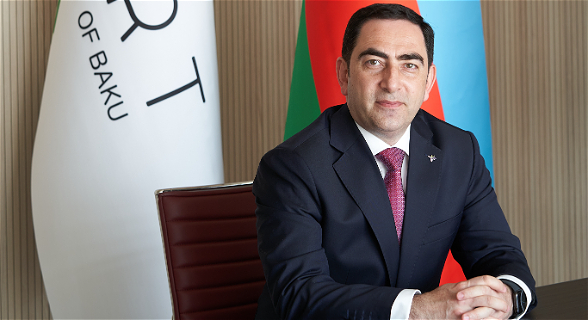
 Taleh Ziyadov
The Director-General of the "Baku International Sea Trade Port" CJSC (18.11.2014 - 18.04.2025)
Taleh Ziyadov
The Director-General of the "Baku International Sea Trade Port" CJSC (18.11.2014 - 18.04.2025)

Farhad Ayyubov
Karabakh War veteran and amputee football playerIntro
In this interview, Farhad Ayyubov, a Karabakh War veteran and amputee football player, reflects on his journey from being injured in combat to becoming a key member of Azerbaijan’s national amputee football team. He shares how a fellow veteran inspired him to join the team during his recovery and emphasizes the importance of football in helping veterans like himself regain a sense of purpose.
Ayyubov highlights the growth of amputee football in Azerbaijan, the pride he feels in representing his country on the international stage, and his hope for the continued development of the sport.
Summary
In Farhad Ayyubov’s opinion, amputee football has given him a new lease on life after his injury, allowing him to regain not only physical strength but also emotional resilience. Ayyubov recalls that when he was first injured in combat before the Second Karabakh War, he never imagined that he would play sports again. The loss of his leg had left him feeling uncertain about his future, but a visit from his fellow veteran and teammate, Gurban Aliyev, changed his perspective. Gurban encouraged him to join the national amputee football team, assuring him that the sport would offer a path to recovery and a renewed sense of purpose. Ayyubov took this advice to heart, and he is now proud to be a part of the team, where he feels he has found his "second leg."
Ayyubov, a high-ranking officer with the rank of captain, reflects on his military service and the sacrifices he and his fellow veterans made for their country. He emphasizes that amputee football was initially introduced as a form of rehabilitation for veterans like himself, providing a way to cope with the physical and emotional scars of war. Over time, however, the sport has grown beyond just rehabilitation, evolving into a platform for competition and national pride.
Ayyubov expresses immense pride in representing Azerbaijan on the international stage, noting that the team has already achieved significant success, including securing second place in a tournament in Scotland. Despite being a relatively new team in a sport with a long history, Ayyubov believes that they have the potential to achieve even greater victories and raise Azerbaijan’s flag in future competitions.
One of Ayyubov’s key messages is the importance of passion and hard work in achieving success, both on and off the field. He stresses that amputee football requires dedication, perseverance, and a strong sense of teamwork. While the sport can be physically demanding, Ayyubov believes that the emotional rewards far outweigh the challenges. He shares that many veterans, when first introduced to the sport, doubt their ability to play football again. However, with encouragement from teammates and support from organizations like AFFA (Azerbaijan Football Federations Association) and the demining agency ANAMA, they eventually find themselves fully immersed in the game, unwilling to leave the field.
Ayyubov also reflects on the broader significance of amputee football in Azerbaijan, viewing it as a way to inspire others who have suffered injuries in conflict. He hopes that more people like him will join the team, recognizing that sports can provide a sense of community, empowerment, and achievement. He emphasizes that while financial and logistical challenges still exist, the support of organizations like AFFA has helped the team overcome many of these obstacles. Ayyubov believes that the next step is to continue building awareness about the sport and encouraging more veterans and amputees to participate.
In addition to his role as a football player, Ayyubov is also an avid supporter of several football clubs, including Neftchi in Azerbaijan, Fenerbahce in Turkey, Liverpool in England, and Inter in Italy. His passion for football, both as a player and a fan, is evident throughout the interview, and he remains committed to promoting the growth of amputee football in Azerbaijan.
Ultimately, Ayyubov’s story is one of resilience, hope, and the power of sports to transform lives. He sees amputee football not only as a personal source of strength but also as a way to inspire others to overcome their own challenges and achieve greatness, both on and off the field.