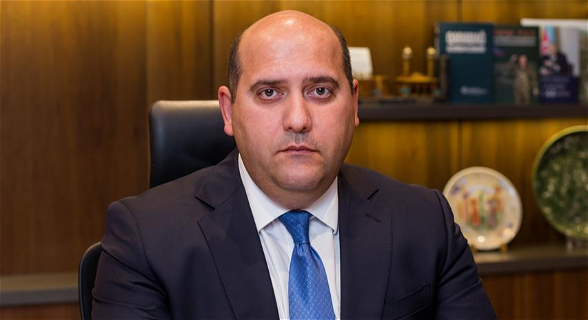
 Emin Huseynov
Special Representative of the President of the Republic of Azerbaijan in the Aghdam, Fuzuli and Khojavand districts
Emin Huseynov
Special Representative of the President of the Republic of Azerbaijan in the Aghdam, Fuzuli and Khojavand districts
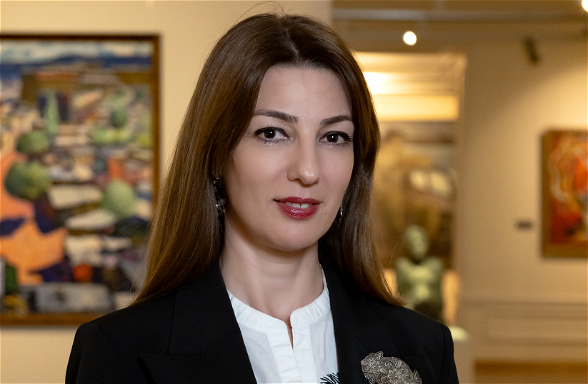
Shirin Malikova
Director of the Azerbaijan National Museum of Art, former director of Azerbaijan National Carpet MuseumIntro
In this interview, Shirin Malikova, Director of the Azerbaijan National Museum of Art, discusses the significance of Azerbaijani carpets, particularly from the Karabakh region, as a central part of the country's cultural identity.
She reflects on the efforts to preserve and repatriate valuable carpets that were traded or looted during the occupation. Malikova emphasizes the symbolic importance of these carpets, the ongoing work in restoring Karabakh’s cultural heritage, and the pride in reviving the tradition of carpet weaving in the liberated territories. She also highlights how the Azerbaijan National Carpet Museum that she previously headed has been instrumental in showcasing Azerbaijan’s artistic heritage both locally and internationally.
Summary
In Shirin Malikova’s opinion, Azerbaijani carpets represent much more than decorative pieces; they are deeply intertwined with the soul and identity of the Azerbaijani people. As the Director of the Azerbaijan National Carpet Museum, Malikova has seen her institution as not only a museum but also a research and educational center dedicated to preserving the legacy of Azerbaijani carpets. She explains that carpets have been woven in every region of Azerbaijan for centuries, and each type of carpet carries its own unique story and reflects the culture of the area it originates from.
Malikova is particularly passionate about Karabakh carpets, which she describes as some of the most valuable and unique carpets in the world. She notes that these carpets, often featuring intricate designs and vibrant colors, have been found in major museums and private collections worldwide, from Turkey and Europe to the United States and Japan. Many of these carpets were traded over the centuries, but others were looted during the occupation of Karabakh. Malikova recounts the efforts of the Azerbaijan National Carpet Museum to track down and repatriate these valuable pieces, including carpets that were wrongly labeled as Armenian in auctions abroad.
Discussing the rich history of carpet weaving in Karabakh, Malikova is proud that the tradition has survived despite the challenges of occupation. She explains that, for Azerbaijani women, weaving carpets has always been a significant part of daily life. Even when families were displaced, women continued to weave carpets as part of their household traditions. Malikova points out that carpets are an essential part of every Azerbaijani family’s life cycle, from weddings to funerals, and that the tradition of passing down carpets to future generations has remained strong.
Malikova shares the emotional moment when Shusha, the cultural capital of Karabakh, was liberated. She recalls how she and her colleagues at the Carpet Museum reacted with joy and immediately began discussing how to restore the museum’s branch in Shusha, which had been evacuated before the occupation. For Malikova, the reopening of the museum’s branch in Shusha, with the first piece being a symbolic Karabakh carpet repatriated from the United States, represents a major milestone in the restoration of Karabakh’s cultural heritage.
One of the most poignant stories Malikova tells is about a Karabakh carpet that was found at an auction in the United States, mislabeled as an Armenian artifact. The carpet was originally woven as a gift from a mother to her son and included a personal inscription in Azerbaijani. The museum successfully reclaimed this carpet, which Malikova says was the first piece to return to Shusha after the city’s liberation. For her, this carpet symbolizes the resilience of the Azerbaijani people and their determination to reclaim their cultural heritage.
Malikova is also deeply involved in promoting contemporary Azerbaijani carpets. She explains that while the country is known for its traditional carpets, contemporary artists are also creating innovative designs that blend old and new techniques. The museum has a dedicated space for showcasing these modern carpets, and Malikova believes that they are an important part of Azerbaijan’s evolving artistic landscape.
Reflecting on the future, Malikova is optimistic about the role of carpet weaving in Azerbaijan’s economic and cultural revival, particularly in the liberated territories of Karabakh. She notes that many women in rural areas rely on carpet weaving as a source of income, and the restoration of carpet production in Karabakh will not only revive a treasured tradition but also provide economic opportunities for returning families.
Malikova is confident that with continued support from the government and organizations like the Heydar Aliyev Foundation, Azerbaijani carpets will continue to be recognized as one of the country’s most important cultural symbols, both locally and internationally.
Short videos
 Carpets tell the story of Azerbaijan’s soul
 Stolen carpets mislabeled as Armenian
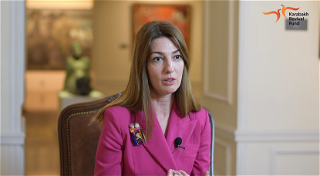 Carpets reflect tradition, character, and life
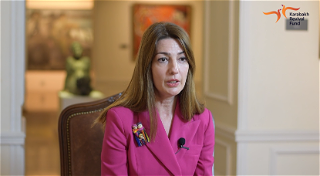 Carpet museum returns home to liberated Shusha
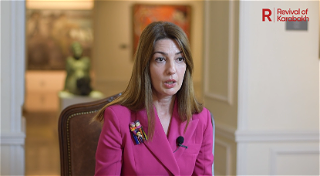 Shirvan ‘Shield’ carpet called museum’s Mona Lisa