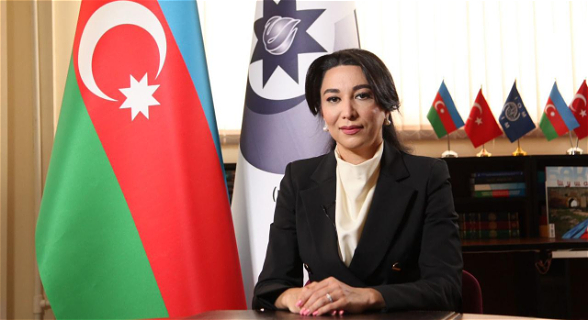
 Sabina Aliyeva
The Commissioner for Human Rights (Ombudsman) of the Republic of Azerbaijan
Sabina Aliyeva
The Commissioner for Human Rights (Ombudsman) of the Republic of Azerbaijan
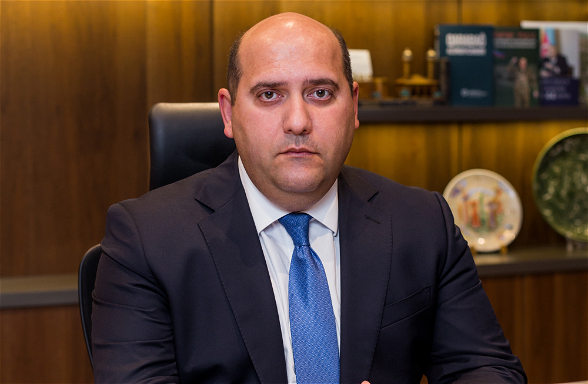
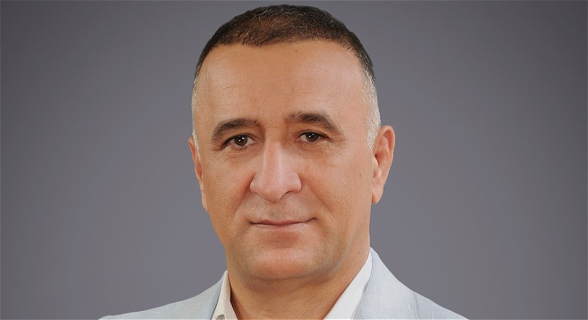
Emin Huseynov
Special Representative of the President of the Republic of Azerbaijan in the Aghdam, Fuzuli and Khojavand districtsIntro
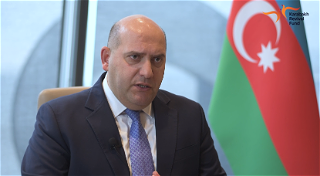
In this interview, Emin Huseynov, Special Representative of the President of Azerbaijan in the liberated territories, discusses the rapid reconstruction of Karabakh, emphasizing the strategic planning that had been considered long before the liberation.
He touches on the challenges of creating sustainable economic opportunities for returning IDPs, focusing on industrial development, renewable energy, and agriculture.
Huseynov also reflects on the cultural and historical significance of restoring Karabakh and the role of Azerbaijan in regional cooperation, offering peace and economic partnership to neighboring Armenia.
Summary
In Emin Huseynov’s opinion, the reconstruction of Karabakh following its liberation was a task that had been envisioned well before the actual military victory. He recalls how, as early as 2006, President Ilham Aliyev initiated an academic exercise at ADA University to hypothetically plan for the region’s post-conflict reconstruction, should the Nagorno-Karabakh conflict be resolved peacefully. The resulting research laid out a general framework for restoration, but when liberation occurred, the situation on the ground required a more tailored approach. Huseynov emphasizes that while this pre-existing plan provided valuable insight, the government had to adapt rapidly to real-time developments.
Huseynov sees the reconstruction of Karabakh as an unprecedented challenge, given the scale of destruction left by the occupation. In his view, the first priority was establishing a government framework to manage the reconstruction process, which involved coordinating multiple stakeholders and ensuring that every step aligned with broader national goals. He explains that the President’s declaration of turning Karabakh into a “paradise” set a high standard, pushing the government to aim for the best available technology and urban planning standards.
Reflecting on the economic aspect of reconstruction, Huseynov discusses the importance of job creation for the 900,000 internally displaced persons (IDPs) who are expected to return to Karabakh. In his opinion, it is not enough to provide housing; the government must also create sustainable jobs that align with the skills and aspirations of the returning population. He highlights the industrial development in Aghdam, where a 490-hectare industrial park has already attracted multiple investors, with factories and enterprises being built and operational. Huseynov believes that this economic revitalization, along with the development of sectors such as renewable energy and agriculture, will ensure that Karabakh becomes a thriving region once again.
In terms of renewable energy, Huseynov is optimistic about the region’s potential. He describes Karabakh as a "giant battery" with significant resources in hydro, solar, and wind energy. He notes that international companies like BP are already investing in solar power plants in Jabrayil, and the government is working on projects in regions like Kalbajar, which have geothermal resources. Huseynov emphasizes that renewable energy will play a central role in making Karabakh a green energy zone, aligning with Azerbaijan’s broader environmental goals and its commitment to net-zero emissions by 2050.
Huseynov also addresses the importance of restoring Karabakh’s cultural heritage. He acknowledges the emotional weight of this task, as Karabakh holds deep historical significance for Azerbaijanis. In his view, the restoration of cities like Shusha, which has been designated the cultural capital, will ensure that the region preserves its identity while embracing modern development.
When discussing the regional implications of Karabakh’s reconstruction, Huseynov is clear that Azerbaijan sees economic cooperation with Armenia as beneficial for both countries. He believes that Azerbaijan’s role as the leading economy in the South Caucasus can drive regional development, and he expresses hope that Armenia will choose to participate in these opportunities. However, he also asserts that Azerbaijan will continue to progress with or without Armenia’s involvement, as the country has the resources and determination to succeed on its own.
Ultimately, Huseynov is confident that the reconstruction of Karabakh will not only restore the region but also serve as a model for post-conflict recovery on a global scale.
He views the process as both a professional challenge and a personal honor, expressing pride in being part of such a transformative project for his country.
Short videos
 From survival to strength a nation united
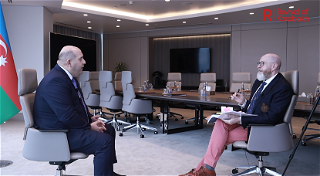 Jobs and industry bloom in post-war Aghdam
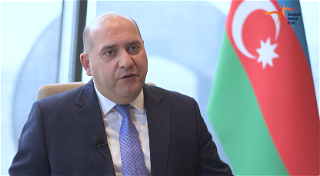 Building cities for a new era, not the past
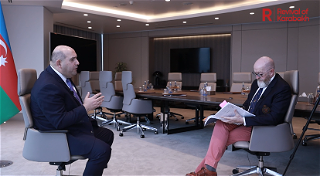 Smart villages thrive on solar and hydro power
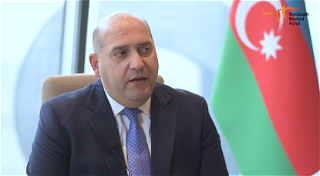 Aghdam rises with vision and precision
 Azerbaijan leads, cooperation remains optional