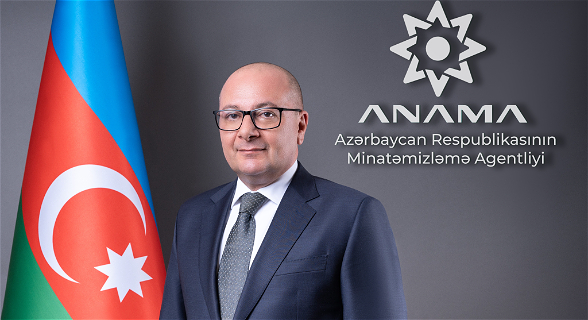
 Vugar Suleymanov
Chairman of the Board of the Mine Action Agency of the Republic of Azerbaijan
Vugar Suleymanov
Chairman of the Board of the Mine Action Agency of the Republic of Azerbaijan
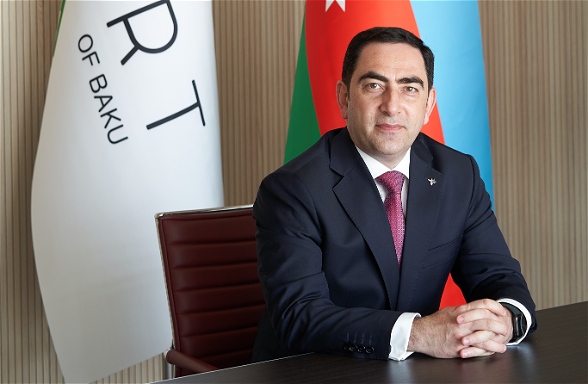
Taleh Ziyadov
The Director-General of the "Baku International Sea Trade Port" CJSC (18.11.2014 - 18.04.2025)Intro
In this interview, Taleh Ziyadov, the Director-General of the "Baku International Sea Trade Port" CJSC, reflects on Azerbaijan’s pivotal moment in history following the liberation of Karabakh. He discusses the country’s strategic role in regional development and its vision for the future, particularly through projects like Port of Baku and Alat Free Economic Zone.
Ziyadov emphasizes the importance of turning Azerbaijan into a major trade and logistics hub, drawing on the lessons of the ancient Silk Road. He also discusses the significance of regional cooperation and how peace and stability in the South Caucasus are essential for economic prosperity across the entire region.
Summary
In Taleh Ziyadov’s opinion, Azerbaijan is at a historic turning point following the liberation of Karabakh and the restoration of its territorial integrity. He describes this moment as a rare and monumental opportunity that comes once in a century, giving Azerbaijan the chance to redefine its role in the region and beyond. Ziyadov believes that this is not just a national achievement but a key development for the broader Central Eurasian region. He argues that Azerbaijan’s rise in this context will shape the future of the South Caucasus and its neighboring areas, contributing to regional growth and stability.
Ziyadov emphasizes that Azerbaijan’s future prosperity will be driven by non-oil sectors, with transport, logistics, and trade playing central roles. He explains that while Azerbaijan’s natural resources, particularly oil and gas, have fueled its economy in the past, the country must now diversify to ensure long-term growth. In his view, the Alat Free Economic Zone and the Port of Baku are vital projects that will turn Azerbaijan into a major logistics and trade hub, much like the key hubs that once dotted the ancient Silk Road. Ziyadov envisions Alat as a "5-star hub" that will not only handle trade but also create a sustainable, innovative, and modern lifestyle for its residents.
Drawing parallels to the ancient Silk Road, Ziyadov believes that modern hubs like Alat will become engines of regional growth, much as Bukhara, Samarkand, and Baghdad once were. He stresses that these hubs are more than just infrastructure projects—they are centers of innovation, culture, and economic development that connect continents. Ziyadov sees the Alat project as a critical piece of Azerbaijan’s strategy to position itself as a key player in global trade, linking Central Asia, Europe, and the Middle East.
Ziyadov is optimistic about Azerbaijan’s potential to attract international trade, particularly in the context of the Middle Corridor, which connects China and Europe. While only a small percentage of China-Europe trade currently passes through this corridor, Ziyadov believes that Azerbaijan can significantly increase its share by improving infrastructure and services. He points out that Azerbaijan’s strategic location, combined with the development of the Alat Free Economic Zone and the expansion of the Port of Baku, will make it an attractive option for international shipping and logistics companies.
In Ziyadov’s view, regional cooperation is essential for realizing Azerbaijan’s vision. He highlights the importance of working with neighboring countries like Kazakhstan, Turkmenistan, and Georgia to harmonize policies and develop infrastructure that supports trade across the Caspian Sea and beyond. He notes that these countries have already made significant investments in their ports and transportation networks, and he believes that by working together, they can create a seamless and efficient trade corridor through the region.
Ziyadov also reflects on the potential for peace and stability to transform the South Caucasus. He agrees with President Ilham Aliyev’s long-standing message that peace will bring significant economic benefits to Armenia, Georgia, and the entire region. In his opinion, the economic development that will follow a peace agreement between Azerbaijan and Armenia will be a win-win for all, with trade and investment opportunities multiplying across borders. He stresses that peace and stability are the foundations of the Silk Road’s success, and he is confident that these principles will drive future prosperity in the region.
Ultimately, Ziyadov sees Azerbaijan as a small but highly influential country that can play a significant role in shaping regional and global developments. He believes that the leadership of President Aliyev has been key to positioning Azerbaijan as a forward-thinking and dynamic player in the region, and he is confident that the country will continue to grow as a leader in trade, logistics, and innovation.
Short videos
 Alat aims to be a five-star Silk Road hub
 Azerbaijan’s model earns global respec
 From cargo routes to economic engines
 Azerbaijan leads Middle Corridor with shared vision