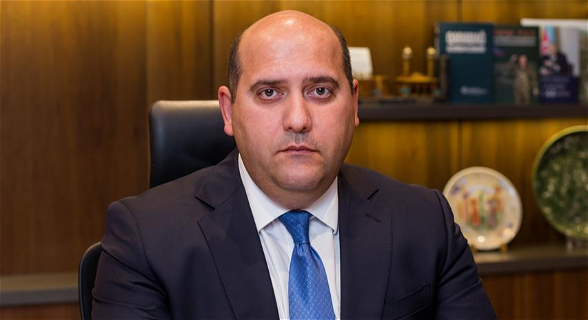
 Emin Huseynov
Special Representative of the President of the Republic of Azerbaijan in the Aghdam, Fuzuli and Khojavand districts
Emin Huseynov
Special Representative of the President of the Republic of Azerbaijan in the Aghdam, Fuzuli and Khojavand districts
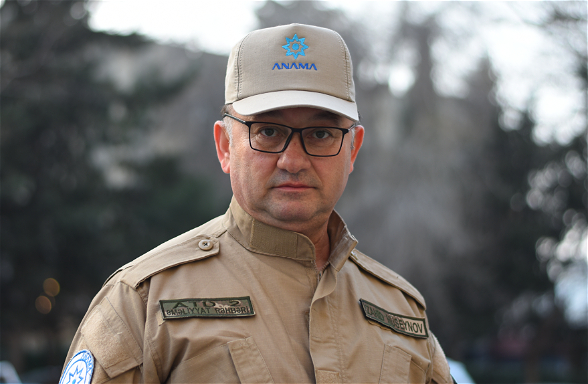
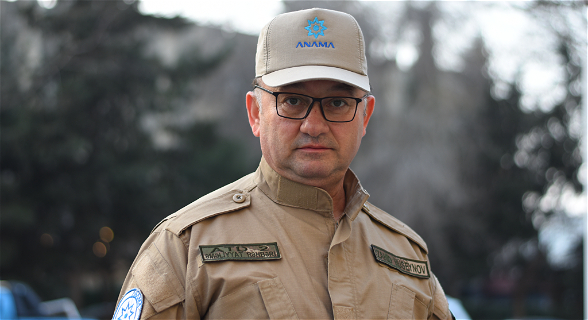
Zahid Huseynov
Former military officer of the Azerbaijani Army, currently employee of ANAMAIntro
In this interview, Zahid Huseynov, a former military officer and current employee of ANAMA (Azerbaijan National Agency for Mine Action), reflects on his career in the military and his transition to demining work. Huseynov shares his pride in serving Azerbaijan and his belief that the liberation of the occupied territories was inevitable. He discusses the complexities of mine clearance in Karabakh, the dangers posed by unexploded mines, and the challenges ANAMA faces due to incomplete mine maps provided by Armenia. Huseynov emphasizes the importance of humanitarian mine clearance and the dedication of ANAMA’s team in ensuring the safe return of displaced Azerbaijanis to their homes.
Summary
In Zahid Huseynov’s opinion, a soldier remains a soldier for life, and his sense of duty continues even after leaving the battlefield. Having served as an officer in the Azerbaijani military for many years, Huseynov explains that his transition to demining work with ANAMA is a natural extension of his military career. He began his military service in 1990, earning the rank of first lieutenant in 1998, and participated in various special operations during his time in the armed forces. After being discharged, his engineering background led him to ANAMA, where he continues to serve his country by working to clear the liberated territories of landmines and unexploded ordnance.
Huseynov reflects on the emotional connection he felt to the lands occupied by Armenia, particularly during his time serving on the frontlines. From his military positions, he would often look at the enemy’s positions and dream of a future where Azerbaijan would reclaim its lands. He always believed that victory was inevitable and that the obstacles placed by the enemy would one day be removed, allowing displaced Azerbaijanis to return to their homes. Now, as a deminer, Huseynov feels honored to be part of the effort to make those lands safe for returnees.
Huseynov emphasizes the severity of the landmine problem in Karabakh, particularly in Aghdam, which he describes as one of the most heavily mined areas in the world. He explains that Armenian forces not only planted explosive mines but also created complex non-explosive defense systems designed to limit movement. These obstacles, including poles, wire, and cutting spirals, caused extensive damage to the region’s infrastructure and farmlands. Huseynov and his team have been working tirelessly to clear these areas, using a combination of human expertise, mechanical tools, and specially trained dogs.
One of the most significant challenges Huseynov faces in his work is the lack of accurate mine maps. He reveals that the maps provided by Armenia after the war only accurately cover about 25% of the mined areas, leaving 75% unknown. This inconsistency has significantly slowed down the demining process, as the teams must rely on their own technical expertise to locate and neutralize mines in areas not indicated on the maps.
Huseynov expresses pride in ANAMA’s safety record, noting that none of their employees have died in mine clearance operations. However, he acknowledges that many civilians and other workers entering uncleared areas without proper guidance have fallen victim to landmine explosions.
Reflecting on the importance of humanitarian mine clearance, Huseynov explains that ANAMA’s work goes beyond military objectives. The agency’s goal is to ensure that the liberated lands are safe for civilians to return, rebuild their homes, and resume their lives. He recounts the emotional reactions of displaced Azerbaijanis who visit their cleared villages, often shedding tears of joy as they step on their native soil for the first time in decades. Huseynov emphasizes that the Armenian forces planted mines with the intent of causing long-term harm, even booby-trapping household items and infrastructure to create additional hazards for returning civilians.
In terms of technology, Huseynov explains that while mechanical tools are useful for mine detection, human involvement is essential to ensure thorough and accurate clearance. Machines can miss mines or shift them out of place, so human deminers must follow up with detailed control checks to ensure the areas are completely safe.
Ultimately, Huseynov’s reflections are filled with pride in Azerbaijan’s military victory and his ongoing role in making the liberated territories safe for future generations. He remains committed to ANAMA’s mission and takes great satisfaction in knowing that his work is helping Azerbaijanis return to the lands that were taken from them.