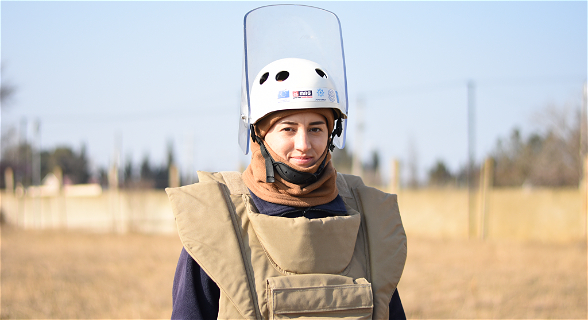
 Aysun Amraliyeva
Female demining specialist
Aysun Amraliyeva
Female demining specialist
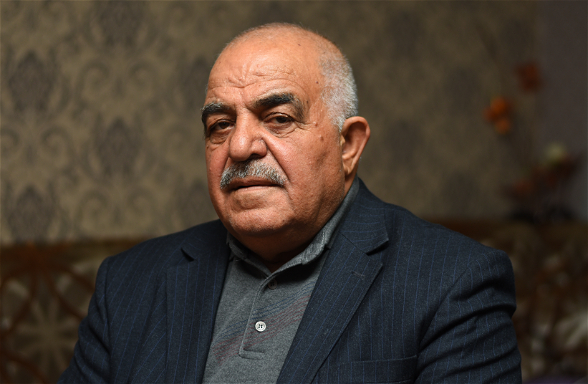
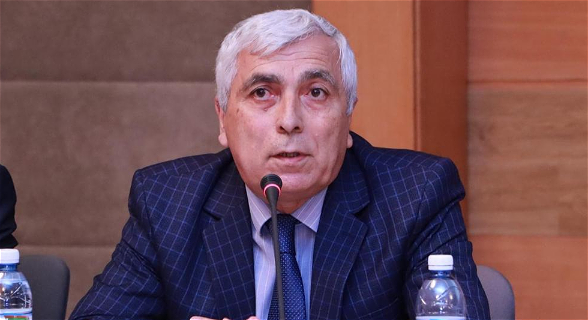
Bakir Ismayilov
Forcibly displaced person, now resident of ZabukhIntro
In this interview, Bakir Ismayilov, a resident of Zabukh village (Lachin district), formerly forcibly displaced person, reflects on the emotional return to his homeland after 30 years of Armenian occupation. He recounts visiting the graves of his parents and the joy of drinking from their family’s spring, which symbolized a return to his roots.
Ismayilov shares memories of the tragic day when he and his fellow villagers were forced to flee under bombardment in 1992. Despite the hardships of displacement, he remained hopeful and expressed immense gratitude to President Ilham Aliyev for liberating their lands. Ismayilov’s story is one of resilience, loss, and eventual triumph.
Summary
In Bakir Ismayilov’s opinion, returning to Zabukh after 30 years was both a deeply emotional and spiritual experience. He recalls his first action upon arriving in June 2023 was to visit the graves of his parents, who were buried in Zabukh. Standing by their graves, he prayed for their souls and for the well-being of President Ilham Aliyev, whose leadership he credits for the liberation of the occupied territories. Ismayilov also shares how he drank from the family’s spring, known as Jeyran Maidens Spring, which brought back memories of his youth and gave him a renewed sense of belonging to his homeland.
Ismayilov reflects on the 30 years of displacement, which he and his fellow villagers endured after being forced to leave Zabukh in 1992. He describes how they lived in Baku, holding onto the hope of one day returning to their ancestral land. The anticipation of returning was overwhelming—each day felt like 100 years as they longed for the moment they could finally go back. Ismayilov expresses deep gratitude to President Aliyev for reclaiming 20 percent of Azerbaijan’s lands, and he offers prayers for the president’s long life.
Ismayilov recounts the tragic events of May 1992, when Armenian forces attacked Zabukh. He worked as an accountant in the village council at the time and remembers how helicopters from Armenia bombarded the village. Although the villagers, including women and children, fled, Ismayilov and others stayed behind to defend their homes. On May 12, 1992, they were warned that Armenian forces were advancing, and by May 17, they were forced to leave Zabukh and flee to Lachin, eventually settling in Jabrayil. The decision to flee was heartbreaking, as the villagers did not want to leave their land, but they had no choice in the face of the enemy's aggression.
Despite the hardships of displacement, Ismayilov remained committed to his homeland. After living in Baku for nearly three decades, he continued to maintain connections with friends and family from Zabukh, many of whom were scattered across 51 districts of Azerbaijan. Over 200 of his fellow villagers passed away during those years, and Ismayilov reflects on the profound sense of loss that his community experienced. However, he also takes solace in the fact that those who survived are now able to return to their rightful homes.
Ismayilov describes his professional life in Baku, where he worked as an accountant and eventually became the head of the veterinary department in the Ministry of Agriculture. His successful career in civil service spanned over 16 years, but his heart always remained in Zabukh. He recalls how his family’s life in Baku was filled with struggles, as they had to leave everything behind when they fled their village. For Ismayilov, the return to Zabukh represents a homecoming that transcends material possessions—it is about reconnecting with the land of his ancestors.
Now, as an elderly man, Ismayilov is filled with pride for his country and its leadership. He is grateful for the modern amenities provided in the newly rebuilt homes, including water, gas, and heating systems, which have made life in Zabukh comfortable for the returning residents. He once again offers prayers for President Ilham Aliyev, whose efforts made this return possible.
Ultimately, Ismayilov’s story is one of enduring faith in the promise of returning to his homeland. His memories of loss and displacement are tempered by the joy of finally being able to live once again on his ancestral land, where he hopes to spend the rest of his life surrounded by family and friends.