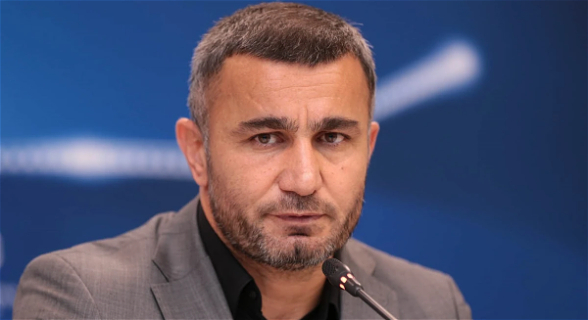
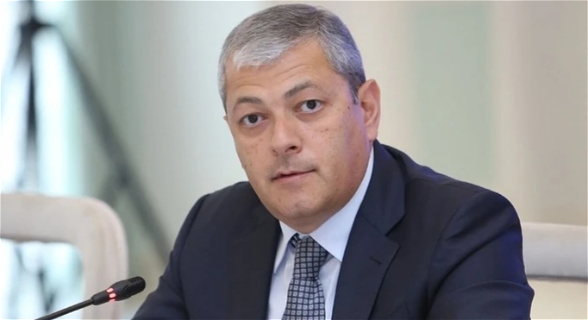
 Aydin Karimov
Special Representative of the President of the Republic of Azerbaijan in the Shusha district
Aydin Karimov
Special Representative of the President of the Republic of Azerbaijan in the Shusha district
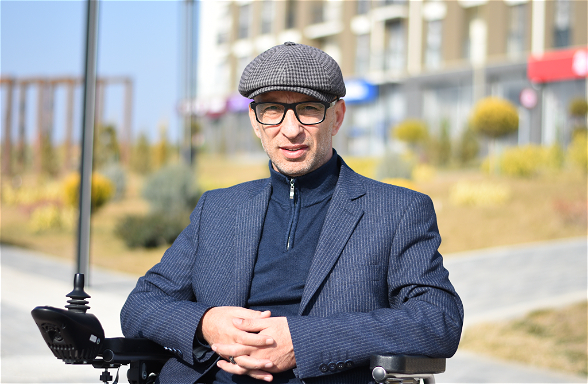
Anar Huseynov
Formerly forcibly displaced person, now a resident of FuzuliIntro
In this interview, Anar Huseynov, formerly a forcibly displaced person, now a resident of Fuzuli, shares his emotional journey of returning to his hometown after its liberation. He reflects on the painful memories of being forcibly displaced from Fuzuli in 1992 and the challenges his family faced living as internally displaced persons (IDPs) in Baku for nearly 30 years.
Huseynov also speaks about his deep connection to Fuzuli, his pride in the liberation of Karabakh, and his overwhelming gratitude to the Azerbaijani leadership for reclaiming their lands. His story highlights the resilience of his family and the hope they have for rebuilding their lives in Fuzuli.
Summary
In Anar Huseynov’s opinion, the experience of returning to his home in Fuzuli after its liberation was beyond words. He recalls that the moment he stepped off the bus in his homeland, he was overcome with emotion, immediately falling to the ground and kissing the earth. Huseynov describes this feeling as indescribable, a culmination of nearly 30 years of longing to return to his ancestral land after being displaced during the Armenian occupation in March 1992. He and his family had left everything behind during the Novruz holiday that year, their homes full of warmth and joy, only to face a future of hardship and uncertainty.
Reflecting on the years of displacement, Huseynov shares that his family lived in very difficult conditions in Baku. For 25 years, he lived in cramped spaces, enduring rain leaking through the roof and water flooding the floors of their temporary shelter. The life of a refugee weighed heavily on him, particularly the stigma associated with being an IDP. Huseynov recalls how he felt marked by his status, comparing it to a bird with a broken wing, unable to soar to its full potential.
Despite being offered housing in Baku, Huseynov refused to accept it, firmly stating that he would only move from Baku to Fuzuli or the cemetery. His strong attachment to his homeland never wavered, and he remained steadfast in his hope that one day Fuzuli would be liberated. Huseynov speaks about his pride in the leadership of Azerbaijan, particularly President Ilham Aliyev, whose vision and determination brought about the liberation of Karabakh. Huseynov believes that this victory has made his generation the most fortunate, as they witnessed the return of their homeland and the restoration of Azerbaijan’s territorial integrity.
Huseynov’s deep connection to Fuzuli is also evident in the stories he tells his children about the region. Although his children were born in Baku and had never seen Fuzuli before its liberation, Huseynov made sure they knew about their family’s roots and the significance of Karabakh. He recounts how his mother gave him the news that Fuzuli had been liberated, an emotional moment that brought him to tears. He felt an overwhelming urge to find and thank the person responsible for freeing his homeland, such was his gratitude and joy.
When asked about the challenges of waiting to return to Fuzuli, Huseynov reflects that the two years after the war felt like 100 years. The anticipation of returning to his city was almost unbearable, but once he arrived, he felt as though the people of Fuzuli had lived together for 40 years, despite having been scattered across Azerbaijan for decades. Huseynov describes the close-knit community that has quickly formed among those who have returned to Fuzuli, a testament to the strength of the bonds they share through their shared history and struggle.
Huseynov is optimistic about the future of Fuzuli, noting that the reconstruction of the city and surrounding villages is well underway. His children, who are now attending school in Fuzuli, have adapted well to their new environment, and he is hopeful that the next generation will continue to thrive in their homeland. Huseynov’s story is one of resilience, hope, and an unbreakable connection to his land, a story shared by many Azerbaijanis who have finally returned to the places they were forced to leave behind.