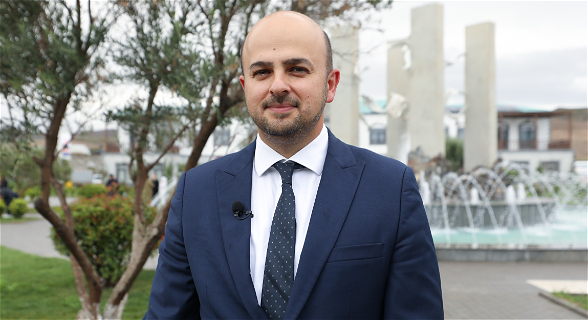
 Vahid Hajiyev
Special Representative of the President of the Republic of Azerbaijan in the Jabrayil, Gubadli and Zangilan districts
Vahid Hajiyev
Special Representative of the President of the Republic of Azerbaijan in the Jabrayil, Gubadli and Zangilan districts
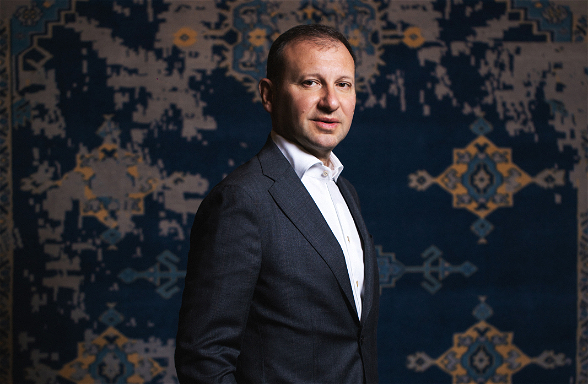
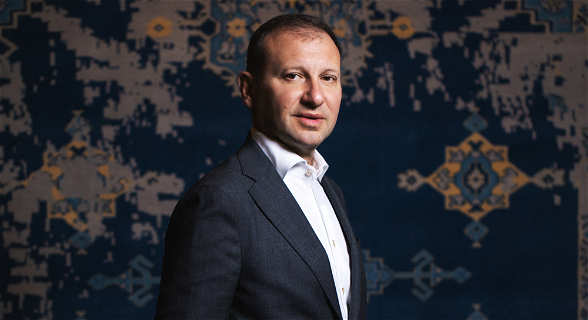
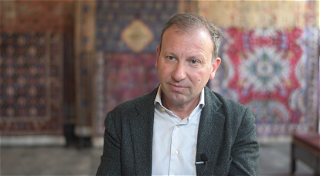
Emin Mammadov
Chairman of the Board of Directors of "Azerkhalcha" OJSCIntro
In this interview, Emin Mammadov, a leading figure in Azerbaijan's carpet industry, discusses his lifelong connection to art and how he became involved in the revival of Azerbaijani carpet weaving, particularly in Karabakh.
He reflects on the cultural significance of carpets, the challenges of keeping the tradition alive during the years of occupation, and the efforts to restore carpet weaving in the liberated territories. Mammadov emphasizes the importance of modernizing the craft while preserving its heritage, and he highlights ongoing collaborations with international designers to promote Azerbaijani carpets globally.
Summary
In Emin Mammadov’s opinion, his career in the carpet industry is a natural extension of his lifelong passion for art. Growing up in an artistic family, with his father being a painter, Mammadov was surrounded by creativity from a young age. He recalls spending time in his father’s art studio, learning from artists of different generations. His exposure to both local and international art, through exhibitions in Azerbaijan and abroad, laid the foundation for his involvement in various artistic endeavors, eventually leading him to the world of carpets.
Mammadov believes that Azerbaijani carpets are not only a form of cultural heritage but a living tradition that must evolve with time. While he acknowledges that carpets have been an integral part of Azerbaijani history for centuries, he stresses that carpet weaving should not be relegated to the past. Instead, it should be continuously developed, with contemporary designs that appeal to modern tastes while retaining the essence of tradition. In his view, carpets, much like fashion, must adapt to remain relevant.
Discussing the challenges posed by the occupation of Karabakh, Mammadov explains that maintaining the tradition of carpet weaving was difficult during those years. However, the designs and techniques of Karabakh carpets were preserved, with workshops continuing to produce them in other regions of Azerbaijan. He is particularly proud that the cultural significance of these carpets has been maintained despite the displacement of weavers from Karabakh. Mammadov is optimistic about the future, as plans are in place to re-establish carpet studios in the liberated territories, allowing Karabakh carpets to once again be woven in their place of origin.
Mammadov emphasizes the importance of involving younger generations in carpet weaving. He acknowledges that traditional perceptions might paint carpet weaving as an activity for older women, but he is pleased to see that many young women are becoming involved in the craft. He mentions that while the art of weaving has traditionally been passed from mother to daughter, there are now formal efforts to train young people, ensuring that the craft continues to thrive in modern times.
In Mammadov’s view, the declaration of Shusha as the cultural capital of Azerbaijan is a critical step in preserving and promoting Karabakh’s rich cultural heritage. He envisions the return of families to the liberated areas, with carpet weaving playing a central role in the economic and cultural revival of the region. He sees carpet studios not only as places of production but as spaces where women can become part of the social fabric of their communities, contributing to the region's rebirth.
Mammadov also highlights Azerbaijan’s growing recognition as a global hub for carpet production. He points to international collaborations, including a project with renowned German designer Jan Kath, who created a collection of contemporary carpets inspired by traditional Azerbaijani designs. This collaboration, Mammadov believes, is a testament to the global appeal of Azerbaijani carpets and their potential to transcend borders while maintaining their cultural roots.
Reflecting on the future, Mammadov is confident that Azerbaijani carpets will continue to play an essential role in the country’s cultural and economic landscape. He believes that with the restoration of Karabakh and the ongoing modernization of carpet designs, the tradition will not only survive but flourish, appealing to both local and international audiences.
Short videos
 Karabakh carpets to be woven on native soil
 UNESCO status affirms carpet’s global legacy
 Carpet roots run village by village