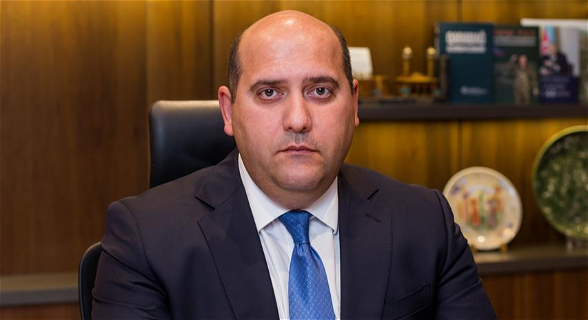
 Emin Huseynov
Special Representative of the President of the Republic of Azerbaijan in the Aghdam, Fuzuli and Khojavand districts
Emin Huseynov
Special Representative of the President of the Republic of Azerbaijan in the Aghdam, Fuzuli and Khojavand districts
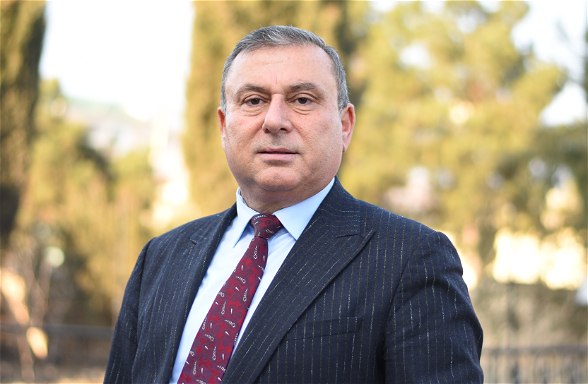
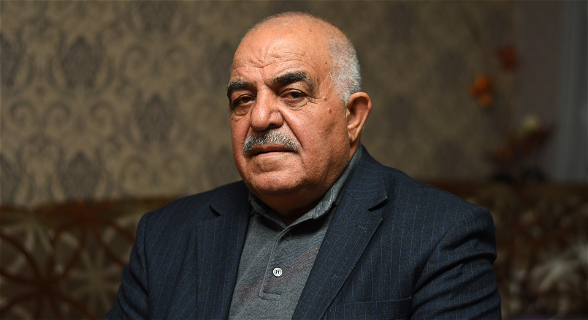
Hafiz Azimzade
Landmine survivor and forcibly displaced person from AghdamIntro
In this interview, Hafiz Azimzade, a forcibly displaced person from Aghdam, recounts his experiences as a survivor of a landmine explosion in the liberated territories of Karabakh.
He reflects on his life in Aghdam before the Armenian occupation, the emotional return to his homeland after its liberation, and his work in water management. Azimzade shares the harrowing details of the landmine incident that led to the loss of his leg, as well as the long recovery process. Despite his injury, he remains proud of being a citizen of a free and victorious Azerbaijan and continues to advocate for landmine clearance efforts.
Summary
In Hafiz Azimzade’s opinion, his identity as a native of Aghdam is deeply intertwined with the culture and history of Karabakh. He speaks with pride about his lineage, as his family has lived in Aghdam for seven generations. Azimzade recalls the beauty of Aghdam before the occupation, describing it as a place filled with traditions and cultural landmarks, such as the famous Karabakh horses and the Karabakh football team, which have both become symbols of the region's strength and resilience. For Salimzade, Aghdam holds a special place in his heart, and he reflects on the joyous days of weddings and gatherings in the city, which have now become cherished memories.
As an engineer, Azimzade worked in the Aghdam Mechanical Irrigation Department of the Azerbaijan Amelioration and Water Farm Company. He returned to his homeland after its liberation in 2020, taking on the responsibility of inspecting water sources in the region. He explains that his role involved documenting irrigation wells, reservoirs, and hydro-technical facilities to ensure their proper maintenance. His team was tasked with assessing water sources like the Khachichay Reservoir and the Gargarchay River, which are vital to the region's irrigation system.
On March 3, 2021, while carrying out these duties, Azimzade became a victim of a landmine explosion in the village of Novuzlu, Aghdam. He vividly describes the terrifying moment when the mine detonated beneath him. In the aftermath of the explosion, he found himself lying face down on the ground, with dust falling around him. Despite his severe injuries, which included the loss of part of his leg, Azimzade remained calm and instructed his colleagues not to approach him for fear of triggering additional mines. Crawling to safety, he retrieved his phone to call for help and was eventually evacuated to a hospital.
Azimzade endured multiple surgeries and a 44-day hospital stay, during which he underwent a total of 10 operations. Despite the physical and emotional toll of the incident, he expresses immense gratitude to the Azerbaijani government for providing him with a prosthesis and the medical care he needed to recover. Salimzade’s leg was amputated below the knee, but he continues to work and lead a fulfilling life with the help of his prosthesis.
Reflecting on his ordeal, Azimzade emphasizes his pride in being an Azerbaijani citizen and a resident of Karabakh. He considers himself fortunate to be alive and to have contributed to the reconstruction of his homeland, even though the work came at great personal cost. Azimzade expresses his deep respect for the Azerbaijani military and the veterans who fought to liberate Karabakh, acknowledging that their bravery and sacrifices paved the way for the region’s freedom.
However, Azimzade also voices concerns about the ongoing threat of landmines in the liberated territories. He stresses that civilians like him are still at risk, as Armenia has not provided accurate mine maps. He urges international organizations and high-ranking officials to address this issue, advocating for the clearance of landmines to prevent further casualties. Azimzade speaks on behalf of the many people who have been injured by landmines, calling for urgent action to ensure that the liberated lands can be safely rebuilt and inhabited.
In conclusion, Azimzade’s story is one of resilience, pride, and advocacy. Despite the hardships he has faced, he remains committed to the development of Karabakh and hopes that future generations will live in a land free of the dangers that still linger from the conflict.