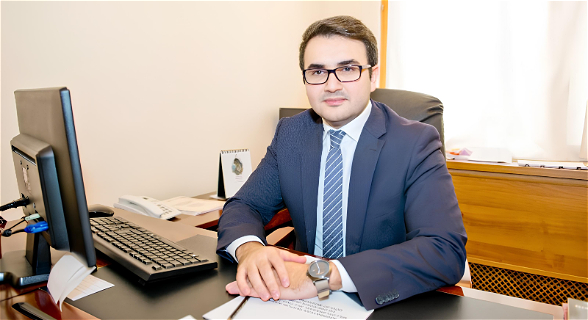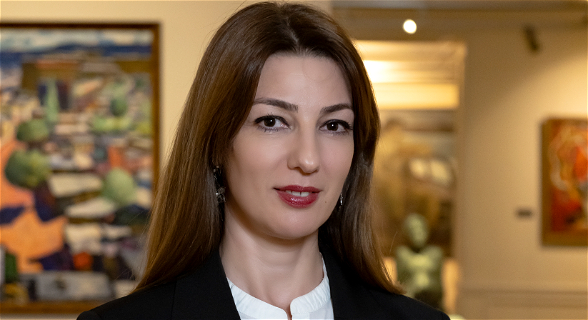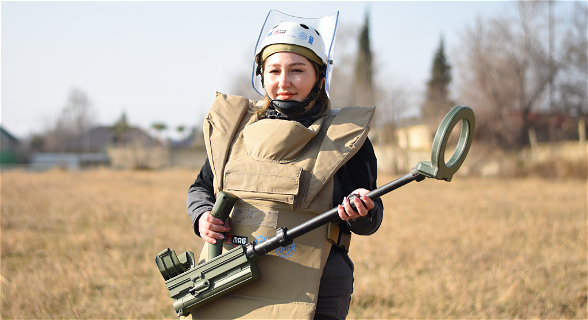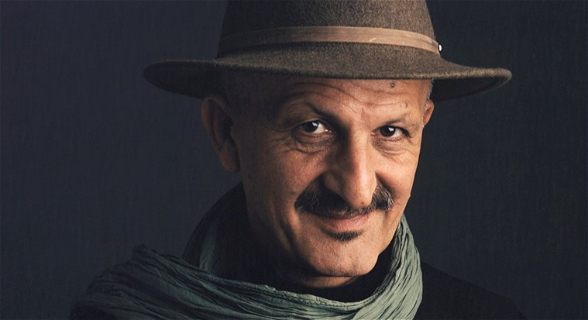
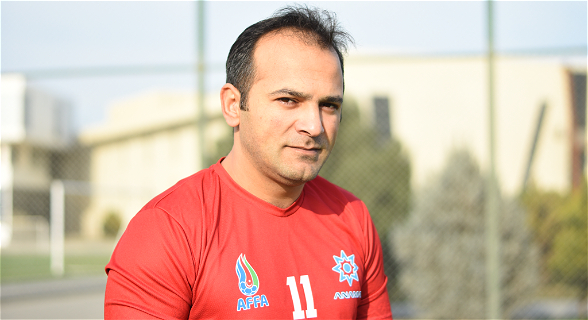
 Farhad Ayyubov
Karabakh War veteran and amputee football player
Farhad Ayyubov
Karabakh War veteran and amputee football player
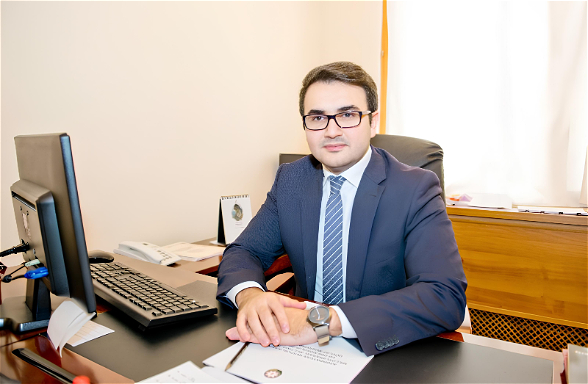
Ravan Hasanov
Executive Director of the Baku International Multiculturalism CentreIntro
In this interview, Ravan Hasanov, Executive Director of the Baku International Multiculturalism Centre, discusses Azerbaijan’s strong multicultural identity and its historical roots in the Caucasus region.
He reflects on how Azerbaijan has successfully implemented a state policy of multiculturalism, which promotes the coexistence of various ethnic and religious communities. Hasanov emphasizes that this multiculturalism is not only a social value but also a government policy that has helped maintain unity, even during challenging periods such as the war with Armenia. He shares personal stories about his own connection to Karabakh, highlighting the deep emotional and cultural ties that Azerbaijani people have to the region.
Summary
In Ravan Hasanov’s opinion, Azerbaijan’s multiculturalism is a deeply rooted characteristic of the country’s history and identity. He explains that Azerbaijan has always been a diverse land, with people of different ethnicities, languages, and religions living together peacefully for centuries. Hasanov believes that this diversity is not just a modern political concept but a natural outcome of the country’s geography and history, stretching back to the times of Caucasian Albania and the pre-Islamic era. This long-standing tradition of coexistence, in his view, has been preserved and reinforced by Azerbaijan’s government, especially after the country gained independence from the Soviet Union.
Hasanov credits national leader Heydar Aliyev with institutionalizing multiculturalism as a state policy, ensuring that the rights of minorities were protected through the constitution and legislative acts. He emphasizes that this is not just about tolerance but about embracing diversity as a source of strength. According to Hasanov, the Azerbaijani model of multiculturalism is unique because it is based on state-supported policies that actively encourage integration while preserving cultural identities. In his opinion, Azerbaijan’s commitment to multiculturalism has been a key factor in its social stability, especially in a region surrounded by complex geopolitical challenges.
Reflecting on Azerbaijan’s international image, Hasanov believes that the world has started to recognize Azerbaijan as a center of multiculturalism, particularly in the last five years. He recalls how, a decade ago, people often associated Azerbaijan solely with its natural resources or its Soviet past. Now, however, international organizations and platforms increasingly acknowledge the country’s multicultural achievements. Hasanov points to events like the Eurovision Song Contest and various international conferences as platforms where Azerbaijan has showcased its commitment to diversity. He is confident that this growing recognition is helping to counteract any misconceptions about Azerbaijan's inclusivity.
Hasanov is particularly proud of Azerbaijan’s ability to maintain its multicultural values during the conflict with Armenia. He stresses that Azerbaijanis never harbored hatred toward Armenians as a people or as a culture. Instead, the conflict was always about restoring justice and liberating occupied territories. In his opinion, this distinction is crucial in understanding Azerbaijan’s approach to the conflict. He recalls that even during the war, Azerbaijani schools never taught hatred or revenge, focusing instead on the importance of justice and peace. This, he believes, is a testament to the strength of Azerbaijan’s multicultural ethos.
Sharing his personal story, Hasanov reveals that he was born in Aghdam and became an internally displaced person (IDP) when his family was forced to flee during the occupation of Karabakh. He reflects on the pain of losing his home at such a young age and the lasting impact it had on him. However, he emphasizes that despite the trauma, his parents never taught him to hate Armenians. Instead, they focused on the hope of one day returning to their homeland. Hasanov describes the deep emotional connection that Azerbaijanis have to Karabakh, explaining that it is more than just a piece of land—it is a symbol of their identity and heritage.
Hasanov is optimistic about the future, particularly the reconstruction of Karabakh and the return of displaced families. He recalls visiting Aghdam shortly after its liberation, finding only one remaining wall of his family’s house. Despite the destruction, he remains hopeful, as he knows that Karabakh will be rebuilt and become a thriving region once again. He believes that the reconstruction efforts will honor the cultural and historical significance of Karabakh, ensuring that it remains a central part of Azerbaijan’s identity.
Ultimately, Hasanov is confident that Azerbaijan’s model of multiculturalism will continue to thrive, both within the country and as a global example of how diversity can be managed through thoughtful state policies. He believes that Azerbaijan’s ability to balance cultural preservation with social integration is a key to its success and that this approach will ensure a peaceful and prosperous future for all its citizens.