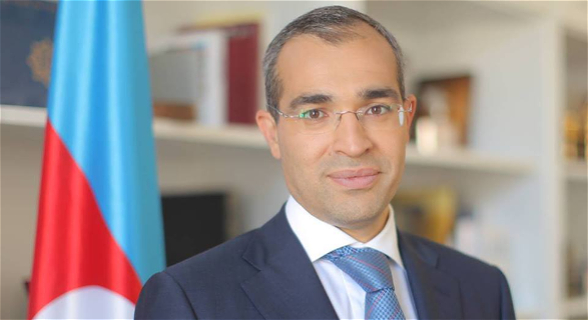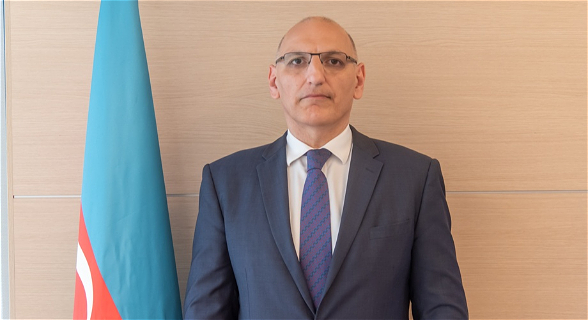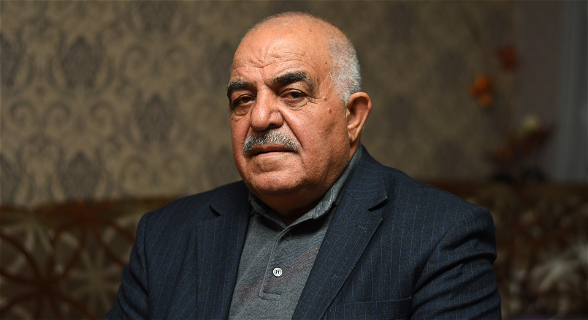
 Anar Guliyev
Chairman of the State Committee on Urban Planning and Architecture of the Republic of Azerbaijan
Anar Guliyev
Chairman of the State Committee on Urban Planning and Architecture of the Republic of Azerbaijan

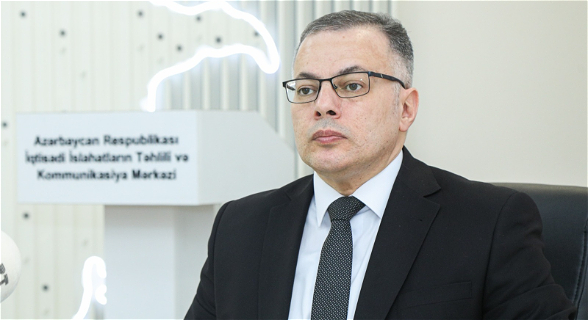
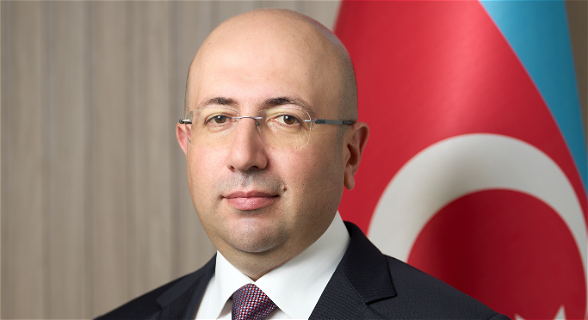
Vusal Gasimli
Executive Director of the Center for Analysis of Economic Reforms and Communication of Republic of AzerbaijanIntro
In this interview, Vusal Gasimli, Executive Director of the Center for Analysis of Economic Reforms and Communication, discusses Azerbaijan's implementation of the Great Return Program, a key post-conflict reconstruction strategy for the liberated territories of Karabakh and Eastern Zangezur.
He outlines the significant challenges Azerbaijan faces, which include post-conflict recovery, post-industrial growth, and transitioning from an oil-based economy.
In Gasimli’s opinion, the Great Return Program is a comprehensive strategy addressing social, economic, cultural, and operational issues to ensure sustainable development in the region. The program includes innovations such as real-time monitoring and evaluation tools, location intelligence, and AI-driven decision-making to track progress and ensure transparency and efficiency.
He highlights Azerbaijan’s unique post-conflict reconstruction model, which integrates green energy, smart cities, and digital transformation. Gasimli also points to specific economic clusters in Aghdam, Fuzuli, Zangezur, and Shusha, which will contribute significantly to the country’s non-oil GDP by 2030.
He emphasizes the importance of knowledge-sharing with other nations and invites international cooperation in Azerbaijan’s development journey.
Summary
In Vusal Gasimli’s opinion, Azerbaijan is facing three major challenges following the liberation of its territories in Karabakh: post-conflict recovery, post-industrial development, and transitioning from an oil-dependent economy.
He believes that the Great Return Program, initiated by President Ilham Aliyev, is central to addressing these challenges. Gasimli views this program as a multi-faceted initiative that integrates social, economic, cultural, and operational aspects, aimed at creating sustainable development in the region.
As Gasimli sees it, the program is not implemented in a vacuum but takes into account the broader context of Azerbaijan’s development needs. He emphasizes the importance of the program’s holistic approach, which includes key areas such as green energy, digital transformation, social capital, and smart city initiatives. In his view, Azerbaijan’s post-conflict reconstruction model is unique, relying on the country’s own resources and innovative strategies.
Gasimli believes that monitoring and evaluation play a crucial role in ensuring the success of the Great Return Program. His center has been tasked with implementing a real-time monitoring and evaluation framework, which uses advanced tools like location intelligence and artificial intelligence (AI) to track progress.
According to him, this approach ensures transparency, accountability, and efficiency in the implementation of the program. He also thinks that AI-powered systems provide valuable insights into projects like the Aghdam Industrial Park, identifying achievements, challenges, and potential solutions.
As Gasimli sees it, the development strategy for the region includes economic clusters focused on key sectors such as green energy, agriculture, and light industry. For example, he thinks that Aghdam is projected to become a major economic hub by 2035 and that the region’s green energy potential, particularly in areas like Jabrayil, could transform Azerbaijan into a significant renewable energy provider.
In Gasimli’s view, the combination of infrastructure development (hardware) and a favorable business environment (software) provides a solid foundation for sustainable growth in Karabakh. He is confident that these efforts will contribute to Azerbaijan’s non-oil GDP, with Karabakh and Eastern Zangezur expected to make up 5-10% of that by 2030.
Gasimli also thinks that Azerbaijan’s reconstruction model could serve as a template for other post-conflict regions. He highlights the importance of knowledge sharing, as he believes that in the age of AI and digital transformation, knowledge is a more valuable asset than oil.
He sees Azerbaijan as being open to sharing its experience and insights with other nations, contributing to global development efforts.