 Anar Guliyev
Chairman of the State Committee on Urban Planning and Architecture of the Republic of Azerbaijan
Anar Guliyev
Chairman of the State Committee on Urban Planning and Architecture of the Republic of Azerbaijan
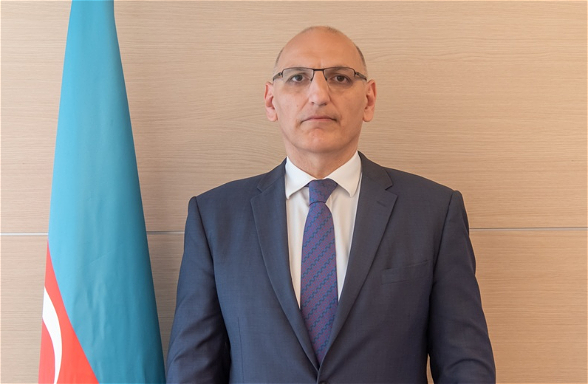
Elchin Amirbayov
Representative of the President of the Republic of Azerbaijan on Special AssignmentsIntro
In this interview, Elchin Amirbayov, Representative of the President of the Republic of Azerbaijan on Special Assignments, reflects on Azerbaijan’s efforts toward peace and reconciliation with Armenia after the Second Karabakh War.
He emphasizes the importance of public diplomacy, peacebuilding efforts, and the challenges of dealing with international misperceptions. Amirbayov discusses the role of the Armenian diaspora in complicating the peace process and highlights the necessity of demining operations. He believes that while there are still obstacles, peace is achievable if both sides genuinely commit to it.
Summary
In Elchin Amirbayov’s opinion, achieving long-term peace between Azerbaijan and Armenia will require considerable effort from both sides. He believes that while the wounds of war are still fresh, many Azerbaijanis, especially those not directly affected by the conflict, are open to the idea of living peacefully alongside Armenians, as they once did during the Soviet era. Amirbayov emphasizes that time is a crucial factor in healing these wounds, but proactive efforts, such as public diplomacy, are essential for fostering understanding between the two nations.
Amirbayov recognizes that the journey toward reconciliation is ambitious, especially given the short time since the Second Karabakh War. However, he is optimistic because Azerbaijan’s society has always been diverse and multicultural, a factor he believes will help facilitate the process of rebuilding relations with Armenians. In his view, preparing populations for peace is crucial, though there are no clear-cut recipes for success. He stresses the importance of engaging people of all ages in peacebuilding efforts, from children to the elderly, to overcome decades of animosity.
When discussing Azerbaijan’s relations with Europe, Amirbayov thinks that the disinformation surrounding Azerbaijan, often fueled by the Armenian diaspora, complicates the country’s image abroad. He believes this stems partly from ignorance and stereotypes, but also acknowledges that Azerbaijan could improve its communication strategies. Despite these challenges, Amirbayov remains confident that with persistent effort, Azerbaijan can change perceptions and strengthen its diplomatic relations with European nations.
Amirbayov believes that winning the peace is often harder than winning the war. He reflects on the aftermath of the Second Karabakh War, noting that while Armenia suffered a defeat, its leadership retained power, which he sees as an indication that Armenian society may prioritize peace over territorial ambitions. However, he also notes that the Armenian diaspora, particularly in countries like France and the United States, continues to influence international opinion in ways that hinder the peace process. He finds that these diaspora communities, being far removed from the realities on the ground, often hold more hardline positions than those living in Armenia.
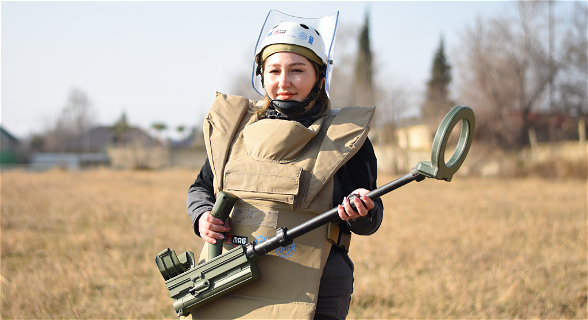
Regarding demining efforts, Amirbayov is frustrated by the lack of international support, which he attributes to misconceptions about Azerbaijan’s wealth as an oil-producing country. In his opinion, this misunderstanding has led to a lack of financial aid for crucial demining operations, despite the fact that Azerbaijan has already allocated significant resources to the issue. He argues that this is not only a matter of national interest but also a human rights issue, as the continued presence of landmines prevents displaced people from returning to their homes.
Amirbayov views the international community’s response to Azerbaijan’s victory in Karabakh as mixed. While some countries have congratulated Azerbaijan and acknowledged its territorial integrity, others, particularly those with strong Armenian lobbies, have been slower to accept the new reality. He believes that time will help reconcile these differences, as Azerbaijan’s control over Karabakh is grounded in international law, and the global community will eventually come to terms with this.
In Amirbayov’s view, the best path to lasting peace lies in direct negotiations between Azerbaijan and Armenia, without third-party interference. He believes that external players, while sometimes well-intentioned, can complicate the peace process by pursuing their own interests. Amirbayov is cautiously optimistic about the future, noting that while challenges remain, there is a real opportunity for peace if both sides approach negotiations in good faith.
Amirbayov also expresses frustration with the continued reluctance of Armenia to fully commit to peace, citing the country’s failure to provide accurate landmine maps as an example of bad faith. He believes that Armenia may be stalling for time to strengthen itself militarily, but he warns that Azerbaijan will not tolerate any new territorial claims or attempts to alter the current balance of power.
In his opinion, the reopening of communication lines and economic cooperation could be a game-changer for Armenia, allowing it to escape its current isolation. Amirbayov stresses that Azerbaijan is not seeking to infringe on Armenia’s sovereignty but is offering a win-win solution that would benefit both nations economically. However, he is concerned that Armenia’s reliance on external allies and its refusal to engage in sincere dialogue may lead to further conflict.
Ultimately, Amirbayov believes that peace is within reach, but only if Armenia fully commits to the process. He is optimistic that by the time the current peace talks conclude, Azerbaijan and Armenia will have opened a new chapter in their relations, allowing future generations to live in peace as neighbors.
Short videos
 Preparing minds for peace and mutual respect
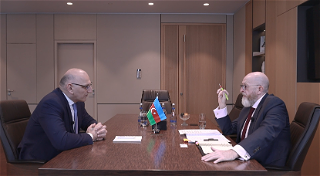 Mines delay justice for displaced Azerbaijanis
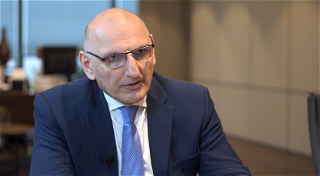 Peace now seen as security, not weakness