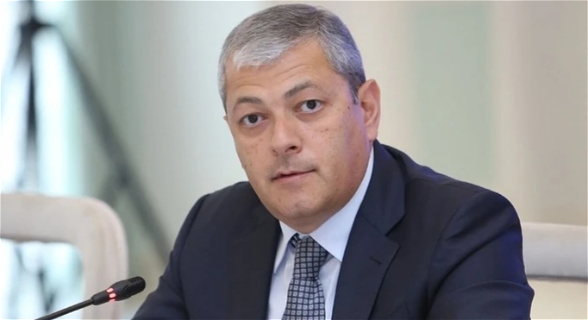
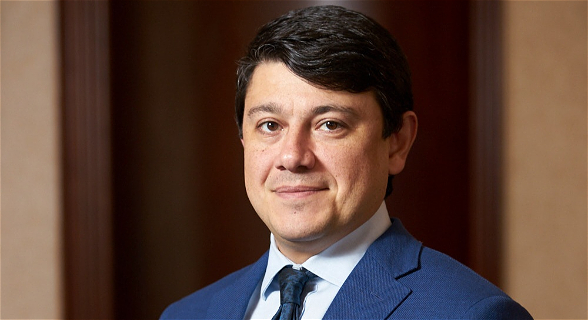
 Fuad Muradov
Chairman of the State Committee on Work with Diaspora of the Republic of Azerbaijan
Fuad Muradov
Chairman of the State Committee on Work with Diaspora of the Republic of Azerbaijan

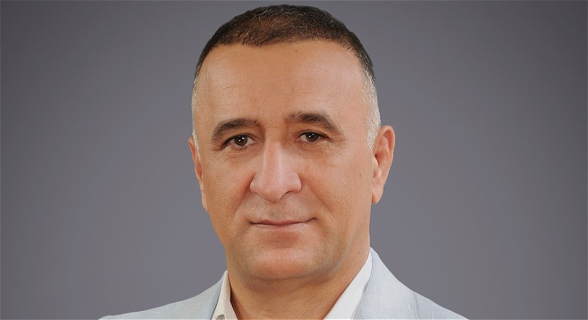
Rey Karimoglu
Karabakh War veteran, Chairman of the Azerbaijan Mine Victims Association and board member of the Karabakh Disabled Veterans SocietyIntro
In this interview, Rey Karimoglu, a First Karabakh War veteran and head of Azerbaijan’s Landmine Victims Organization, shares his personal story of living in Aghdam before the war and his experiences during the conflict.
He recounts the trauma of displacement, his involvement in defending his village, and the injuries he sustained from landmines. Karimoglu reflects on the impact of the war on his life and the challenges faced by landmine victims in Azerbaijan. He also discusses his ongoing advocacy for veterans and war victims, emphasizing the need for societal support and the government's commitment to helping disabled veterans and the families of martyrs.
Summary
In Rey Karimoglu’s opinion, the conflict in Karabakh was a sudden and traumatic event that forever changed the lives of people like him who lived in Aghdam. He recalls his childhood in the village of Shikhbabali in Aghdam, where his father was a carpenter and life was peaceful. Karimoglu served in the Soviet army from 1985 to 1987 and returned to Azerbaijan in 1988, just as tensions with Armenians were beginning to escalate. At the time, residents of Aghdam had no idea that their Armenian neighbors would become enemies. He describes how Armenian aggression began with stoning children and women traveling from Aghdam to Shusha, followed by the infamous march from Aghdam to Khankendi, where Azerbaijani protesters were killed.
Karimoglu recounts how his life changed drastically after the war started. He had dreams of pursuing higher education, studying construction in Aghdam. However, with the conflict intensifying, he and other young men took up arms to defend their village from Armenian attacks. In 1991, a battalion was formed, and Karimoglu fought in various battles to protect Azerbaijani villages until he was injured twice by landmines, including once by an anti-tank mine. His injuries were severe enough to take him out of active combat in 1993, and he spent months recovering in hospitals.
The invasion of Aghdam marked the end of normal relationships between Armenians and Azerbaijanis. Karimoglu was in Moscow when his hometown was invaded, and upon returning to Azerbaijan, he found that his family’s house had been destroyed, and his relatives had fled to Agjabedi.
Karimoglu’s injuries led him to join the Society for Karabakh Disabled People in 1993, where he began advocating for war victims, veterans, and their families. He became the head of the Landmine Victims Organization in 2007, working to provide assistance and raise awareness about the dangers of landmines, which continue to claim lives in the region. He emphasizes the psychological toll that the war took on veterans, many of whom lost limbs or suffered severe trauma. Karimoglu speaks with emotion about his friends who considered suicide after being wounded in battle, and he remains committed to supporting them through his organization.
Karimoglu is grateful for the government’s efforts to support veterans and the families of martyrs, noting that both President Ilham Aliyev and First Vice-President Mehriban Aliyeva have shown strong dedication to improving the lives of these individuals. While acknowledging some challenges in working with government officials, Karimoglu believes that overall, the state is committed to ensuring that no veteran or martyr’s family is left without support. He praises the distribution of housing and modern prosthetics for disabled veterans, which have significantly improved their quality of life.
Despite his advocacy work, Karimoglu admits that the emotional burden of helping his fellow veterans is heavy. He has always been seen as a mediator between veterans and the government, and while this role is difficult, he feels it is his duty to continue. He expresses pride in Azerbaijan’s military victory and the country’s leadership, particularly in reclaiming the occupied territories. Karimoglu reflects on the day Shusha was liberated, describing the overwhelming emotions he felt as he watched the events unfold on television. He sees the liberation of Karabakh as a triumph for the Azerbaijani people, and he is proud to have contributed to the defense of his homeland.
Ultimately, Karimoglu believes that Azerbaijanis are a peaceful people who want to live in harmony with their neighbors, including Armenians. He recalls witnessing the horrors of the Khojaly massacre and emphasizes that Azerbaijanis do not seek revenge but justice. For Karimoglu, the goal is peace, and he hopes that the future will bring stability and prosperity to the region, allowing people to rebuild their lives without fear of further conflict.