 Vugar Suleymanov
Chairman of the Board of the Mine Action Agency of the Republic of Azerbaijan
Vugar Suleymanov
Chairman of the Board of the Mine Action Agency of the Republic of Azerbaijan
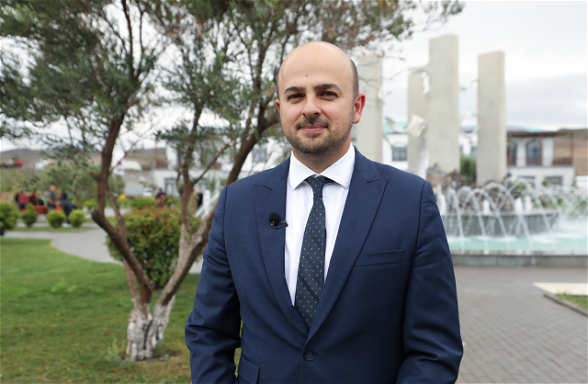
Vahid Hajiyev
Special Representative of the President of the Republic of Azerbaijan in the Jabrayil, Gubadli and Zangilan districtsIntro
In this interview, Vahid Hajiyev, Special Representative of the President of the Republic of Azerbaijan in the Jabrayil, Gubadli and Zangilan districts, discusses the rapid reconstruction and development of the liberated territories.
He highlights the importance of combining modern infrastructure with sustainability, focusing on the creation of smart villages and the revival of agricultural, green energy, and tourism sectors. Hajiyev emphasizes the personal commitment of President Ilham Aliyev to these projects and the active involvement of local communities in shaping master plans for their future. He also reflects on the challenges of rebuilding areas heavily contaminated by mines and creating a sustainable economy for returning internally displaced persons (IDPs).
Summary
In Vahid Hajiyev’s opinion, the rapid reconstruction of the liberated territories, particularly in the Zangilan district, is driven by a combination of modern planning and deep emotional connection to the land. He believes that the speed and efficiency with which the development has progressed are remarkable, noting that many people are astonished by how smoothly the transition from war to rebuilding has occurred. Hajiyev attributes much of this success to the personal involvement of President Ilham Aliyev, who attends every groundbreaking ceremony, no matter how large or small the project. He believes that this personal touch has infused the reconstruction with a sense of purpose and urgency.
Hajiyev reflects on the importance of passion in the reconstruction process. He explains that for many Azerbaijanis, particularly those whose families were displaced for decades, returning to Karabakh is not just a matter of physical resettlement but an emotional and cultural homecoming. This passion, in his view, has been a key driver in the rapid development of the region. Without this deep emotional connection, he believes it would have been much more difficult to achieve such significant progress in such a short time.
One of the most ambitious initiatives in the region, according to Hajiyev, is the development of smart villages. He explains that the smart village concept is not only about integrating modern technology into rural living but also about creating comfortable living conditions for returning IDPs. These villages will feature efficient infrastructure, access to government services, job opportunities, and sustainable energy sources. In his view, smart villages are designed to ensure that returning families can enjoy a high quality of life while contributing to the local economy.
Hajiyev emphasizes the importance of community involvement in the planning process. He recounts how his team worked closely with local communities, particularly IDPs, to gather detailed information about their former homes. In his opinion, these personal insights were crucial in shaping the master plans for new villages and cities. For example, during the planning of Horovlu village, local residents shared vital information about the traditional Kahris water systems that had existed before the occupation. This input led to significant changes in the master plan to ensure that these historical water sources would be preserved and rehabilitated.
On the environmental front, Hajiyev is particularly excited about the potential for green energy in the region. He explains that Zangilan and Jabrayil are ideally suited for solar and hydroelectric power generation, with long hours of sunlight and several rivers providing ample opportunities for renewable energy projects. He mentions that a 240 MW solar power plant is already being developed in Jabrayil, along with multiple hydroelectric plants in Zangilan. In his view, these green energy projects will not only power the region but also contribute to Azerbaijan’s broader environmental goals.
Hajiyev is also optimistic about the region’s economic potential. He outlines five key sectors that will drive economic growth in the liberated territories: agriculture, mining, logistics, green energy, and tourism. He believes that agriculture, in particular, will be a major contributor to the region’s economy, given the fertile soil and favorable climate. Modern farming techniques, such as drip irrigation and the use of drones, will help make agriculture more attractive to younger generations, whom Hajiyev refers to as "Generation Z."
Tourism is another area where Hajiyev sees great potential. He notes that the historical significance of Karabakh, combined with its natural beauty, will make it a prime destination for both domestic and international visitors. In his opinion, the development of high-quality hotels, recreation centers, and transportation infrastructure will help turn the region into a major tourism hub. He believes that the peace process will play a crucial role in attracting tourists, as a stable and secure environment is essential for the region’s long-term success.
Despite the progress, Hajiyev acknowledges that challenges remain, particularly in the area of demining. He explains that many parts of Zangilan and Jabrayil are heavily contaminated with landmines, which pose a significant obstacle to reconstruction. He praises the work of ANAMA (Azerbaijan National Agency for Mine Action) but notes that the demining process is dangerous and time-consuming. However, he remains confident that these challenges will be overcome, allowing for the safe return of displaced families.
Ultimately, Hajiyev views the reconstruction of the liberated territories as a monumental task but one that is being met with determination and optimism. He believes that the combination of modern infrastructure, community involvement, and strong leadership will ensure that the region not only recovers but thrives in the years to come.
Short videos
 Presidential care in every Karabakh stone
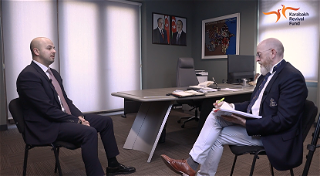 Solar rooftops and rivers power green Zangilan
 Rebuilding with vision, guided by UN goals
 Great Return builds hope and homes