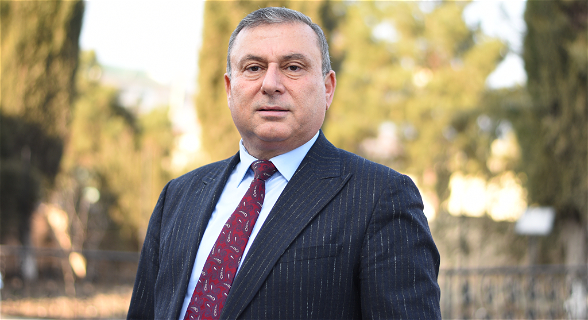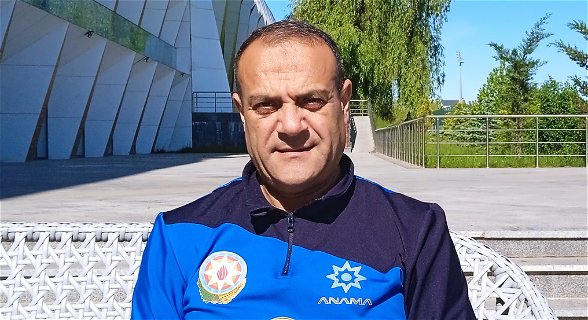
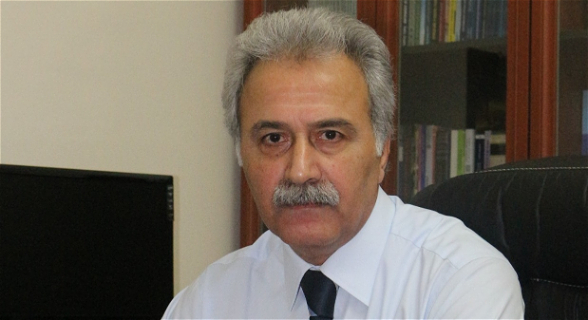
 Nazim Imanov
Expert on post-conflict reconstruction, Director of the Institute of the Economy under Azerbaijan National Academy of Sciences
Nazim Imanov
Expert on post-conflict reconstruction, Director of the Institute of the Economy under Azerbaijan National Academy of Sciences

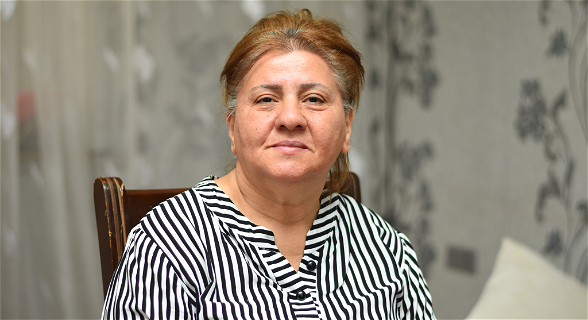
Lala Huseynova
Carpet-craftswomanIntro
In her interview, Lala recalls her family’s life in Shusha before and during the occupation, their eventual relocation to Baku, and the challenges they faced. She describes the memories of hiding from the war, the hardships of living in Baku, and her eventual return to Shusha.
She also talked about carpet weaving, a tradition passed down through generations, and how it differs from carpet painting. She emphasized the importance of preserving the originality of traditional Karabakh carpets through both ancient and contemporary artistic methods.
Summary
In her opinion, Lala Huseynova, who is from Shusha, shares her family’s memories and the profound impact of the occupation and subsequent return. Her family, originally from a simple background in Shusha, faced the uncertainty of war and eventually had to flee the city. Lala recalls being only three years old during the conflicts but holds vivid memories of hiding in the basement, the distressing sounds of gunfire, and the frightening image of a man lying dead on the ground. After the occupation of Shusha, her family moved to Baku, where they faced numerous challenges, including adjusting to life as refugees in a foreign city and struggling with food shortages during the early 1990s.
Her father’s work as a builder helped them settle, though the fear of losing their homeland lingered. Lala developed an interest in art, and by her school years, she was known as an artist. This early passion would eventually shape her career in carpet design, where she reflects on the distinct difference between traditional carpet weaving and modern carpet painting. She emphasizes how the ancient art form of carpet weaving evolved over time, blending traditional craftsmanship with modern tools like computers in her design process. She explains that traditional carpet weaving differs from carpet painting, as the latter involves creating sketches or patterns that are then translated into woven carpets. While ancient weavers didn’t follow formal blueprints, their creations still conveyed their cultural essence and stories. In modern times, the process has evolved, and designers like Lalə now use computers to sketch and plan intricate patterns. Despite technological advances, Lala emphasizes the importance of preserving the traditional designs and symbols found in Karabakh carpets, which remain irreplaceable and culturally significant.
Despite years of hardship, Lala maintained hope for Shusha’s return. The long-awaited moment came with the recapture of Shusha, and she vividly remembers the joy that surged through her when the news was announced. Her second trip to Shusha as a professional carpet designer allowed her to search for her family’s home in the city. Although her visit was tinged with sadness over the destruction and mines left behind, she was determined to find her house. Lala’s story reflects a journey of resilience, a deep connection to her homeland, and the continuous process of rebuilding both personally and collectively.