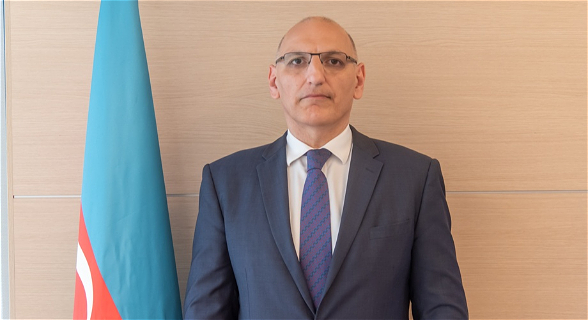
 Elchin Amirbayov
Representative of the President of the Republic of Azerbaijan on Special Assignments
Elchin Amirbayov
Representative of the President of the Republic of Azerbaijan on Special Assignments
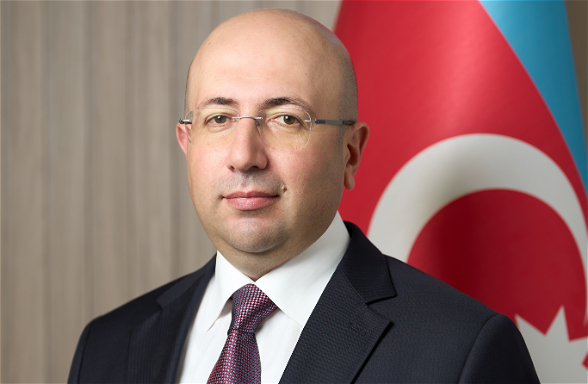
Anar Guliyev
Chairman of the State Committee on Urban Planning and Architecture of the Republic of AzerbaijanIntro
In this interview, Anar Guliyev, Chairman of the State Committee on Urban Planning and Architecture of the Republic of Azerbaijan, discusses the rapid reconstruction efforts in Karabakh, focusing on the Great Return Program.
He highlights the challenges faced in urban planning, such as demining and the involvement of internally displaced persons (IDPs) in the decision-making process.
Guliyev emphasizes the importance of balancing historical preservation with modern infrastructure needs and the integration of smart city technologies. He views Karabakh’s reconstruction as a model for post-conflict recovery, setting an example for international best practices.
Summary
In Anar Guliyev’s opinion, the reconstruction of Karabakh following its liberation is a monumental and urgent task. He believes the swift progress is necessary, as former internally displaced persons (IDPs) have already waited for decades to return to their homeland, and further delays are unacceptable.
Guliyev views the coordination of the government, led by President Ilham Aliyev, as critical to ensuring the successful implementation of the Great Return Program, which focuses on regenerating the region’s cities and villages. In his view, the program faces numerous challenges, including demining, which he describes as the largest obstacle to planning and reconstruction.
As Guliyev sees it, urban planning for Karabakh requires a structured approach, involving multiple stages and documents. He explains that planning begins with a general plan that covers the entire region, followed by master plans for individual cities, and finally, detailed plans for specific areas. According to Guliyev, this method ensures long-term, systematic development. He also points out that Karabakh’s diverse landscape, with both flat and mountainous areas, adds complexity to the planning process.
Guliyev believes that the personal involvement of President Aliyev provides inspiration and guidance for the entire government, encouraging them to aim for the highest standards. He emphasizes the importance of engaging IDPs in the planning process, noting that the government has held numerous meetings with them to gather feedback on their vision for their hometowns. In his opinion, involving the community in these discussions is essential to ensuring that the redevelopment reflects both the cultural heritage and the desires of the people who will return to live there.
In Guliyev’s view, preserving Karabakh’s historical and cultural identity, while also meeting the needs of a modern, younger generation, is a delicate balancing act. He acknowledges the extensive efforts by First Vice President Mehriban Aliyeva to protect cultural heritage, and he believes these efforts must continue as part of the reconstruction. At the same time, Guliyev also recognizes the importance of incorporating modern infrastructure, such as internet access and socio-economic opportunities, to appeal to younger generations who will inhabit these areas.
As Guliyev sees it, the concept of smart cities is central to the redevelopment of Karabakh. He explains that smart city planning involves using technology to create more efficient, sustainable urban environments. In his opinion, the integration of renewable energy sources, such as solar, wind, and hydropower, positions Karabakh as a leader in green energy. Guliyev views Karabakh as a testing ground for innovative approaches to urban development, which could serve as a model for other regions in Azerbaijan and beyond.
According to Guliyev, the coordination between various government departments, private sector stakeholders, and international partners is essential to the success of the Great Return Program. He emphasizes that daily meetings and collaboration ensure efficient decision-making and faster progress. Guliyev also acknowledges the pressure to meet the ambitious goals of the program, with the aim of relocating 140,000 people to 100 newly designed settlements by 2026. However, he remains optimistic, believing that proper planning and a systematic approach will lead to successful outcomes.
Guliyev believes that Azerbaijan is already establishing itself as a model for post-conflict recovery on the global stage. He cites Azerbaijan’s participation in international forums and its collaboration with organizations like UN-Habitat as evidence of its leadership in this area. In his opinion, the lessons learned from Karabakh’s reconstruction can be applied to other post-conflict regions, and he is confident that Azerbaijan will continue to share its expertise with the international community.
Despite the remarkable progress made so far, Guliyev believes there is still much work to be done, and he expresses a desire to accelerate the pace of reconstruction even further.
He remains focused on the long-term vision for Karabakh, confident that the region will become a model of sustainable, modern development while honoring its rich cultural heritage.
Short videos
 A vision that unites and inspires a nation
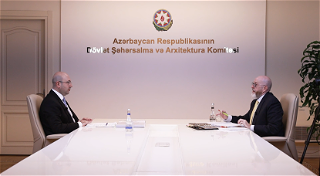 Smart cities start with smarter planning
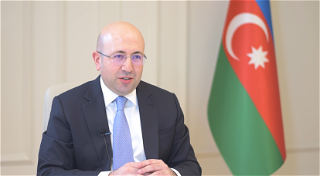 Karabakh becomes urban and green energy lab